
As a supplier of Tungsten Carbide Dies, I've witnessed firsthand the critical role that density plays in the performance and application of these essential tools. Tungsten carbide dies are used in a wide range of industries, from automotive manufacturing to the production of precision components. Understanding how density affects their use is crucial for both manufacturers and end-users.
The Basics of Tungsten Carbide Die Density
Tungsten carbide is a composite material made up of tungsten carbide particles bonded together by a metallic binder, usually cobalt. The density of a tungsten carbide die is determined by the proportion of tungsten carbide particles to the binder, as well as the quality and distribution of these components. Generally, a higher density indicates a greater proportion of tungsten carbide, which is known for its hardness, wear resistance, and high strength.
The density of tungsten carbide dies can vary significantly depending on the specific grade and manufacturing process. For example, some high-performance grades may have a density as high as 15 g/cm³, while others may be closer to 14 g/cm³. This variation in density can have a profound impact on the die's properties and performance.
Impact on Hardness and Wear Resistance
One of the most significant ways in which density affects the use of tungsten carbide dies is through its influence on hardness and wear resistance. As the density increases, so does the proportion of tungsten carbide particles in the die. Tungsten carbide is extremely hard, with a hardness rating on the Mohs scale of around 9. This high hardness makes it highly resistant to wear, abrasion, and deformation, even under high-pressure and high-temperature conditions.
In applications where the die is subjected to frequent contact with hard or abrasive materials, such as in wire drawing or cold heading, a higher density die will typically have a longer service life. The increased hardness and wear resistance allow the die to maintain its shape and dimensional accuracy over a greater number of cycles, reducing the need for frequent replacements and minimizing downtime.
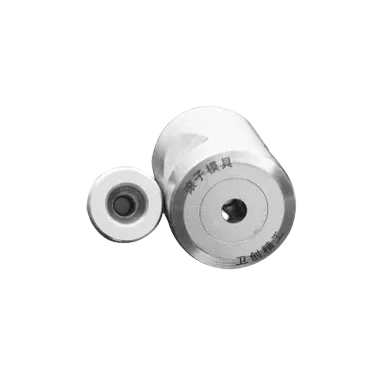
For instance, in the production of wire using a Quill COD, a high-density tungsten carbide die can withstand the high tensile forces and friction involved in the wire drawing process. This results in a smoother surface finish on the wire and a more consistent diameter, improving the overall quality of the final product.
Influence on Strength and Toughness
While hardness and wear resistance are important, the strength and toughness of a tungsten carbide die are also crucial factors, especially in applications where the die is subjected to high impact or shock loads. Density can have a complex relationship with strength and toughness.
In general, a higher density die will have greater strength due to the increased proportion of tungsten carbide particles. However, too high a density can also make the die more brittle, reducing its toughness and increasing the risk of cracking or chipping under impact. Therefore, it's essential to find the right balance between density, hardness, and toughness for a specific application.
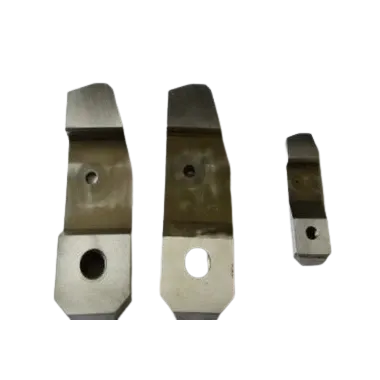
In cold heading operations, for example, where the die is used to shape metal parts by applying high pressure, a die with the appropriate density and toughness is required. A Carbide Cut Off Blade COB made from a tungsten carbide grade with the right balance of properties can withstand the high impact forces involved in cutting off the formed parts without breaking or deforming.
Effect on Thermal Conductivity
Another important property affected by the density of tungsten carbide dies is thermal conductivity. Tungsten carbide has relatively high thermal conductivity, which means it can dissipate heat quickly. This is particularly important in applications where the die generates a significant amount of heat, such as in hot forging or extrusion.
A higher density die generally has better thermal conductivity because of the greater proportion of tungsten carbide particles. This allows the die to transfer heat away from the working surface more efficiently, reducing the risk of thermal damage and extending the die's lifespan. In addition, good thermal conductivity helps to maintain a more uniform temperature distribution within the die, which can improve the quality of the formed parts.
For example, in the production of metal components using a Carbidecut Off Die COD in a hot forging process, a high-density die can effectively dissipate the heat generated during the forging operation. This prevents the die from overheating, which could lead to softening, cracking, or other forms of damage.
Considerations for Different Applications
The optimal density of a tungsten carbide die depends on the specific application and the requirements of the manufacturing process. Here are some examples of how density considerations vary across different industries:
- Wire Drawing: In wire drawing, the die must have high wear resistance to maintain the quality of the wire surface and dimensional accuracy. A higher density die is typically preferred, as it can withstand the high friction and pressure involved in the process. However, the die also needs to have sufficient toughness to resist cracking under the tensile forces.
- Cold Heading: Cold heading operations require dies that can withstand high impact loads and maintain their shape and dimensional accuracy. A die with a balanced density, hardness, and toughness is essential. The density should be high enough to provide good wear resistance and strength, but not so high that it becomes brittle.
- Hot Forging: In hot forging, the die is exposed to high temperatures and thermal cycling. A high-density die with good thermal conductivity is necessary to dissipate heat quickly and prevent thermal damage. The die also needs to have sufficient strength and toughness to withstand the high pressure and impact forces involved in the forging process.
Conclusion
In conclusion, the density of a tungsten carbide die has a profound impact on its use in various applications. It affects the die's hardness, wear resistance, strength, toughness, and thermal conductivity, all of which are critical factors in determining the die's performance and service life.
As a supplier of Tungsten Carbide Dies, we understand the importance of providing our customers with dies that are tailored to their specific needs. By carefully selecting the appropriate grade and density of tungsten carbide, we can ensure that our dies deliver the best possible performance and value.
If you're in the market for high-quality Tungsten Carbide Dies and would like to discuss your requirements, please feel free to contact us. We're here to help you find the perfect solution for your manufacturing needs.
References
- "Tungsten Carbide: Properties, Production, and Applications" - A technical guide on tungsten carbide materials.
- Industry reports on the use of tungsten carbide dies in different manufacturing processes.