
Hey there, folks! I'm a supplier of Cylindrical Rollers. Today, we're gonna dig into an interesting topic: How does the density of cylindrical rollers affect their inertia?
Let's start with the basics. Inertia is a property of matter that resists changes in its state of motion. Simply put, it's how hard it is to start an object moving or to stop it once it's moving. And density, well, that's the mass of an object per unit volume. You can think of it as how much "stuff" is packed into a certain space.
So, how do these two things relate to our cylindrical rollers? Well, it all comes down to the formula for moment of inertia. For a solid cylindrical roller rotating about its central axis, the moment of inertia (I) is given by (I = \frac{1}{2}mr^{2}), where m is the mass of the roller and r is the radius.
Now, mass (m) and density ((\rho)) are related by the equation (m=\rho V), where V is the volume of the roller. For a cylinder, the volume (V=\pi r^{2}h), where h is the height (or length) of the cylinder.
If we substitute (m = \rho V=\rho\pi r^{2}h) into the moment of inertia formula, we get (I=\frac{1}{2}(\rho\pi r^{2}h)r^{2}=\frac{1}{2}\rho\pi h r^{4}).
From this formula, we can see that the moment of inertia (a measure of inertia for rotational motion) is directly proportional to the density ((\rho)) of the cylindrical roller. That means, as the density of the roller increases, its inertia also increases.
Let's think about this in a practical sense. Imagine you have two cylindrical rollers of the same size (same radius and length), but one is made of a denser material than the other. The denser roller will have more mass because there's more "stuff" packed into the same volume. And according to our moment - of - inertia formula, this denser roller will have a greater moment of inertia.
So, what does this matter in real - world applications? Well, in machinery where cylindrical rollers are used, the inertia of the rollers can have a big impact on performance. For example, in a conveyor system, rollers with high inertia will require more force to start rotating and to change their speed. This could mean that more powerful motors are needed, which can increase energy consumption.
On the other hand, in applications where stability is key, like in some precision instruments, rollers with higher inertia can be beneficial. They are less likely to be affected by small external disturbances and can maintain a more consistent rotation.
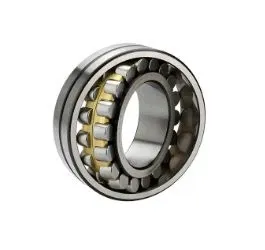
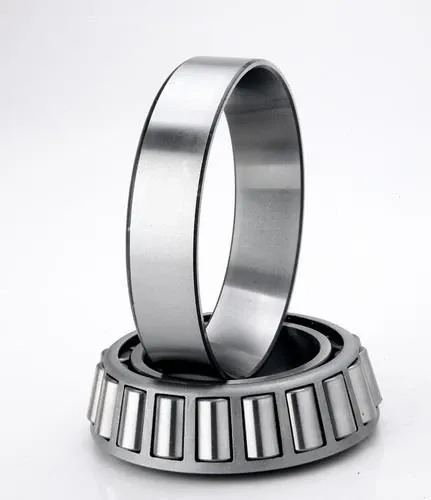
As a supplier of Cylindrical Roller, I know that the choice of roller density is a crucial decision for our customers. Depending on the specific application, they need to balance the advantages and disadvantages of high - and low - density rollers.
If you need a roller that can quickly start and stop, a lower - density option might be better. This way, you can save on energy and reduce wear and tear on the driving mechanisms. But if you need a roller that can provide smooth and stable rotation, a higher - density roller could be the way to go.
It's also worth mentioning that different materials have different densities. For instance, steel is a commonly used material for cylindrical rollers, and it has a relatively high density. There are also other materials like aluminum, which has a lower density. The choice of material can not only affect the density and inertia of the roller but also its durability, corrosion resistance, and cost.
When it comes to roller design, there are other types of rollers that you might want to consider as well. Cross Roller and Taper Roller Disign have their own unique properties and applications. Cross rollers can handle loads in multiple directions, while tapered rollers are great for handling thrust loads as well as radial loads.
So, if you're in the market for cylindrical rollers or are just exploring your options, it's important to understand how density affects inertia and how that, in turn, impacts your application. Whether you're designing a new machine or upgrading an existing one, making the right choice can lead to better performance, lower costs, and a longer lifespan for your equipment.
As a trusted supplier, I'm here to help you navigate through these choices. We have a wide range of cylindrical rollers with different densities, materials, and sizes to meet your specific needs. Whether you need high - precision rollers for a delicate instrument or heavy - duty rollers for an industrial conveyor, we've got you covered.
If you're interested in learning more or want to discuss your requirements, don't hesitate to reach out. We can have a chat about your application, and I'll do my best to recommend the most suitable rollers for you. Let's work together to find the perfect solution for your project!
References
- Halliday, D., Resnick, R., & Walker, J. (2014). Fundamentals of Physics. Wiley.
- Shigley, J. E., & Mischke, C. R. (2001). Mechanical Engineering Design. McGraw - Hill.