
Hey there! As a supplier of Gravity Taper Rollers, I've been deeply involved in understanding the ins and outs of these components. One crucial aspect that often gets overlooked but has a huge impact on performance is dynamic balance. So, let's dive into how dynamic balance affects the performance of gravity taper rollers.
First off, what's dynamic balance? In simple terms, it's about making sure that a rotating object, like our gravity taper rollers, has its mass evenly distributed around its axis of rotation. When a roller is dynamically balanced, it rotates smoothly without causing excessive vibrations. On the flip side, an unbalanced roller can lead to a whole bunch of problems.
Let's start with the impact on the lifespan of the rollers. When a gravity taper roller is out of balance, it creates uneven forces as it rotates. These uneven forces put extra stress on the roller itself and the surrounding components. Over time, this stress can cause premature wear and tear. For example, the bearings that support the roller may start to wear out faster, and the roller surface may develop uneven wear patterns. This not only shortens the lifespan of the roller but also increases the maintenance costs. In a well - balanced system, the forces are evenly distributed, and the roller can operate for a much longer time without significant damage.
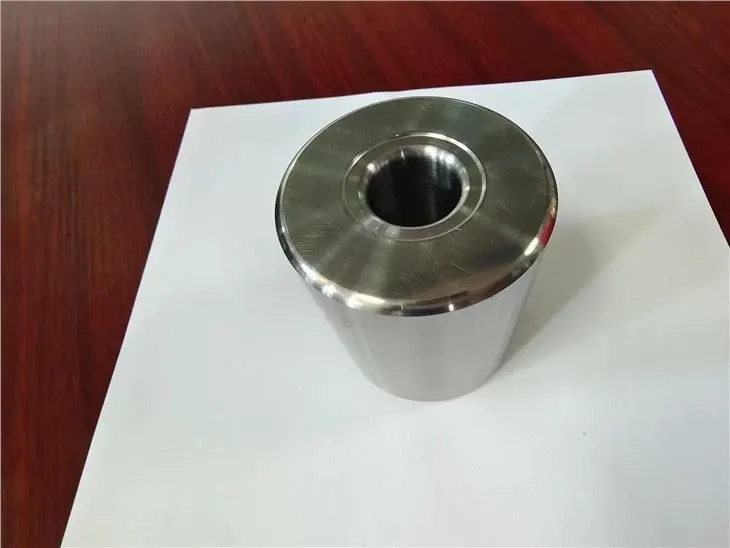
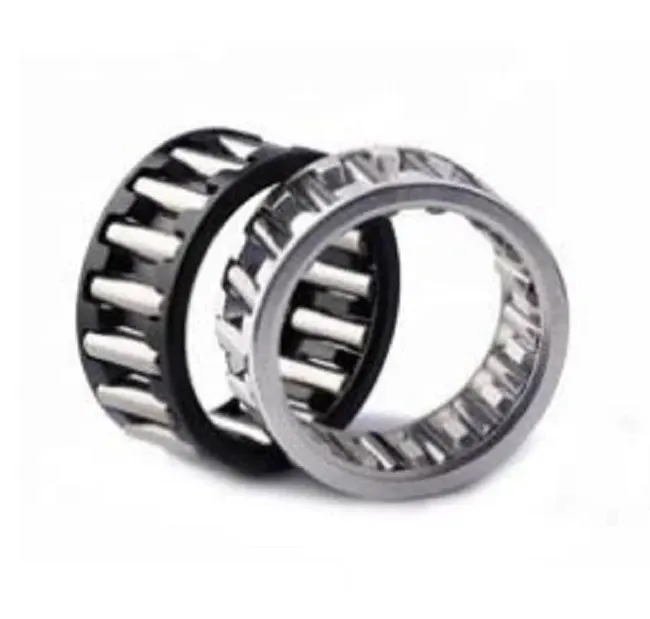
Another area where dynamic balance plays a key role is in the smoothness of operation. Unbalanced gravity taper rollers can cause vibrations during rotation. These vibrations can be transmitted throughout the entire machinery, leading to a noisy and unstable operation. In industrial settings, this can be a real nuisance. For instance, in a high - speed manufacturing process, the vibrations from unbalanced rollers can affect the precision of the products being made. On the other hand, a dynamically balanced roller rotates smoothly, reducing vibrations and ensuring a quiet and stable operation. This is especially important in applications where precision and smoothness are critical, such as in aerospace or medical equipment.
The efficiency of the machinery is also greatly affected by the dynamic balance of gravity taper rollers. When a roller is unbalanced, the extra energy is wasted in trying to overcome the uneven forces. This means that more power is required to drive the roller, leading to higher energy consumption. In a large - scale industrial operation, this can result in significant cost increases over time. A balanced roller, however, operates more efficiently, using less energy to achieve the same level of performance. This not only saves money but also makes the operation more environmentally friendly.
Now, let's talk about the impact on load - carrying capacity. An unbalanced roller may not distribute the load evenly across its surface. This can lead to localized overloading, where certain parts of the roller are subjected to much higher stresses than others. As a result, the roller may fail under a lower load than it is designed for. In contrast, a dynamically balanced roller can evenly distribute the load, allowing it to carry the maximum load as specified by its design. This is crucial in applications where heavy loads need to be supported, such as in construction equipment or heavy - duty manufacturing machinery.
So, how do we ensure the dynamic balance of gravity taper rollers? At our company, we use advanced balancing techniques and equipment. We start by carefully measuring the mass distribution of each roller during the manufacturing process. If any imbalance is detected, we make precise adjustments to correct it. This may involve removing or adding small amounts of material from specific areas of the roller. We also conduct regular quality checks to ensure that the rollers maintain their balance over time.
In the market, there are different types of rollers that are related to gravity taper rollers. For example, the Needle Roller is another type of roller that has its own unique applications. Needle rollers are often used in applications where space is limited and high load - carrying capacity is required. They have a long and thin shape, which allows them to fit into tight spaces. Our company also offers the 2022 New product Taper Roller With Hole in The Center. This new product has some innovative features that make it suitable for specific applications. The hole in the center can be used for various purposes, such as for lubrication or for attaching other components. And then there's the Spherical Roller. Spherical rollers are designed to accommodate misalignment and can handle both radial and axial loads. They are commonly used in applications where the shafts may not be perfectly aligned.
If you're in the market for high - quality gravity taper rollers or any of the related products, we're here to help. Our rollers are manufactured with the highest standards of quality and precision, and we pay great attention to the dynamic balance of each roller. Whether you need rollers for a small - scale project or a large - scale industrial operation, we can provide you with the right solutions.
Contact us today to discuss your requirements and start a procurement negotiation. We're confident that our products will meet your needs and exceed your expectations.
References
- "Rolling Bearing Technology" by SKF Group
- "Mechanical Design Handbook" by Mark's Standard Handbook for Mechanical Engineers