
Hey there! As a steel ball supplier, I've had my fair share of experiences with how these little round wonders perform in different conditions. Today, I wanna chat about something that's super important, especially for those in certain industries - how steel balls perform in low-temperature environments.
First off, let's talk about the basic properties of steel balls. Steel balls are made from various types of steel, each with its own unique characteristics. You've got Weldable Steel Balls, Din 5401 Steel Ball, and Solid Steel Balls. These are just a few examples, and each type has its own advantages and uses.
Now, when it comes to low-temperature environments, things can get a bit tricky. The cold can have a significant impact on the performance of steel balls. One of the main things that happens is a change in the mechanical properties of the steel. As the temperature drops, the steel becomes more brittle. This means that it's more likely to crack or break under stress.
Let's dig a little deeper into the science behind this. At normal temperatures, the atoms in steel are arranged in a relatively stable lattice structure. But when the temperature drops, the movement of these atoms slows down, and the lattice becomes more rigid. This increased rigidity makes the steel less able to deform without breaking. So, if a steel ball is subjected to a sudden impact or high pressure in a low-temperature environment, it might not be able to withstand the force and could crack.
Another factor to consider is the coefficient of thermal expansion. Steel, like most materials, expands when heated and contracts when cooled. In a low-temperature environment, the steel balls will contract. If the contraction is uneven or if the balls are constrained in some way, it can lead to internal stresses. These internal stresses can weaken the balls and make them more prone to failure.
But it's not all doom and gloom. There are ways to mitigate these issues. One approach is to use a special type of steel that's more resistant to low temperatures. Some steels are alloyed with elements like nickel, which can improve the toughness and ductility of the steel at low temperatures. These alloyed steels are often used in applications where the steel balls will be exposed to extreme cold.
Surface treatments can also play a role. Applying a coating to the steel balls can help protect them from the harsh effects of the cold. For example, a thin layer of anti-corrosion coating can prevent moisture from getting to the steel, which can reduce the risk of rust and corrosion. Rust can further weaken the steel and make it more likely to break in a low-temperature environment.
In some industries, like the aerospace and cryogenic industries, the performance of steel balls in low-temperature environments is critical. In aerospace applications, steel balls are used in various components, such as bearings and actuators. These components need to work reliably in the cold temperatures of high altitudes. Similarly, in cryogenic applications, where temperatures can reach extremely low levels, the steel balls need to maintain their integrity to ensure the proper functioning of the equipment.
Let's take a look at some real-world examples. In a cryogenic storage facility, steel balls are used in valves and pumps. These components need to operate smoothly even at temperatures close to absolute zero. If the steel balls were to fail due to the cold, it could lead to leaks or malfunctions, which could be dangerous and costly. By using the right type of steel and proper surface treatments, the risk of failure can be significantly reduced.
Now, I know what you're thinking. How do I choose the right steel balls for a low-temperature application? Well, it all depends on the specific requirements of your project. You need to consider factors like the temperature range, the amount of stress the balls will be subjected to, and the environment they'll be in.
If you're in an industry where low-temperature performance is crucial, it's a good idea to work with a supplier who has experience in this area. As a steel ball supplier, I've helped many customers find the right solution for their low-temperature needs. I can provide you with detailed information about the different types of steel balls available and how they perform in cold conditions.
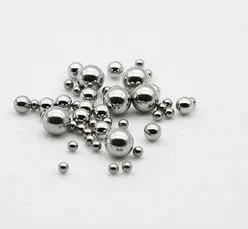
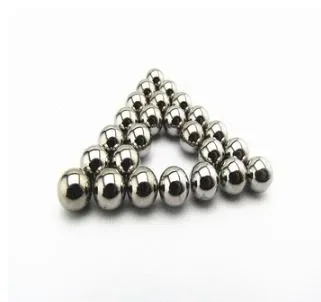
We also offer custom solutions. If you have a unique application that requires a specific size, shape, or material for your steel balls, we can work with you to create a product that meets your exact specifications. Whether you need Weldable Steel Balls for a welding application in a cold environment or Din 5401 Steel Ball that can withstand extreme cold, we've got you covered.
So, if you're in the market for steel balls and you're concerned about their performance in low-temperature environments, don't hesitate to reach out. We can have a chat about your project, and I'll do my best to help you find the perfect solution. Whether you're looking for a small quantity for a research project or a large order for an industrial application, we can work together to get you the right steel balls at the right price.
In conclusion, while low-temperature environments can pose challenges for steel balls, there are ways to ensure their reliable performance. By understanding the science behind the effects of cold on steel and taking the appropriate measures, you can use steel balls effectively in even the coldest conditions.
References
- "Metallurgy of Low-Temperature Steels" - A technical publication on the properties of steel at low temperatures.
- "Cryogenic Engineering Handbook" - Contains information on the use of steel components in cryogenic applications.
- Industry reports on the aerospace and cryogenic industries, which often discuss the requirements for steel balls in low-temperature environments.