
Hey there! I'm a supplier of steel balls, and today I'm gonna chat about how these little guys can seriously up the accuracy of measuring tools.
First off, let's talk about what steel balls are. They're basically spherical objects made of steel, and there are different types, like Carbon Steel Ball and Stainless Steel Ball. Each type has its own unique properties that make them suitable for different applications.
Now, how do they help with measuring tool accuracy? Well, one of the key things is their high degree of roundness. Steel balls are manufactured to extremely tight tolerances in terms of their roundness. This means that when they're used in measuring tools, they provide a consistent and reliable reference point. For example, in a micrometer, a steel ball can be used as a calibration standard. The micrometer measures the diameter of the ball, and if the ball is perfectly round, the measurement will be accurate. Any deviation from the expected measurement can then be used to adjust the micrometer, ensuring that it gives accurate readings for other objects as well.
Another important aspect is their hardness. Steel balls, especially those made from high - quality steels, are very hard. This hardness allows them to resist wear and deformation. In a measuring tool, this is crucial because if the components of the tool start to wear out, the accuracy of the measurements will be affected. For instance, in a ball - bearing based measuring device, the steel balls act as rolling elements. Their hardness ensures that they maintain their shape over time, even under repeated use and pressure. This means that the measuring tool can continue to provide accurate results for a long period.
The surface finish of steel balls also plays a big role. A smooth surface finish reduces friction. In measuring tools, friction can cause errors in measurements. For example, in a linear measuring device where steel balls are used to guide the movement of a measuring arm, a rough surface would create more friction. This friction could cause the arm to stick or move unevenly, leading to inaccurate readings. On the other hand, a smooth - surfaced steel ball allows for smooth and precise movement, enhancing the accuracy of the measurement.
Let's take a closer look at some specific measuring tools where steel balls are used. In a coordinate measuring machine (CMM), steel balls are often used as reference points. The CMM is a highly accurate device used to measure the dimensions of complex parts. By using steel balls as reference points, the machine can accurately determine the position and orientation of the part being measured. The roundness and stability of the steel balls ensure that the reference points are consistent, which is essential for obtaining accurate measurements.
In a dial indicator, steel balls are used in the mechanism that converts linear motion into rotational motion. The smooth rolling of the steel balls ensures that the movement is transmitted accurately, allowing the dial indicator to show precise measurements of small displacements. Without the use of steel balls, the conversion of motion would be less accurate, and the dial indicator would not be able to provide reliable readings.
Now, let's talk about the different types of steel balls in more detail. Carbon Steel Ball is a popular choice. It's relatively inexpensive and has good hardness and wear resistance. Carbon steel balls are often used in general - purpose measuring tools where high - precision is required but cost is also a factor. They can withstand moderate loads and are suitable for a wide range of applications.
Stainless steel balls, on the other hand, are known for their corrosion resistance. In measuring tools that are used in harsh environments, such as in the presence of moisture or chemicals, stainless steel balls are the way to go. Their resistance to corrosion ensures that they maintain their integrity over time, which is essential for accurate measurements. Even in a humid or corrosive atmosphere, the stainless steel balls will not rust or corrode, allowing the measuring tool to continue functioning accurately.
In addition to their physical properties, the manufacturing process of steel balls also contributes to their ability to improve measuring tool accuracy. Modern manufacturing techniques, such as precision grinding and lapping, ensure that the steel balls are produced with high precision. These processes can achieve very tight tolerances in terms of size, roundness, and surface finish. This means that when the steel balls are used in measuring tools, they can provide a high level of accuracy right from the start.
When it comes to choosing the right steel balls for a measuring tool, there are a few things to consider. First, you need to think about the application. What kind of measurements will the tool be used for? Is it for high - precision work or general - purpose measurements? The type of steel, such as carbon steel or stainless steel, should be chosen based on the environment in which the tool will be used. You also need to consider the size of the steel balls. The size should be appropriate for the design of the measuring tool to ensure proper functioning.
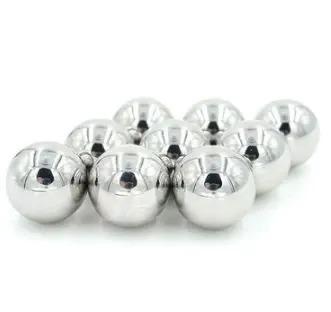
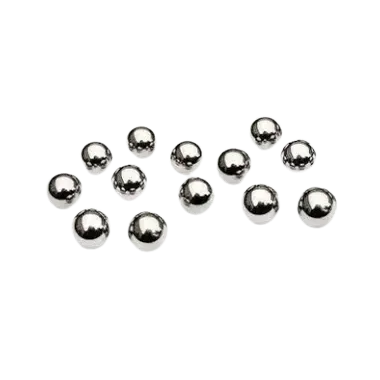
If you're in the market for high - quality steel balls to improve the accuracy of your measuring tools, look no further. As a steel ball supplier, I've got a wide range of options to meet your needs. Whether you need carbon steel balls for cost - effective solutions or stainless steel balls for corrosion - resistant applications, I can provide you with the right products.
If you're interested in discussing your requirements or want to place an order, don't hesitate to reach out. We can have a chat about the best steel balls for your measuring tools and work out a deal that suits you. Let's work together to make your measuring tools more accurate and reliable.
References
- "Handbook of Measuring Tools and Techniques"
- "Engineering Materials and Their Applications"
- "Manufacturing Processes for Precision Components"