
New technologies have revolutionized various industries, and the cold heading dies sector is no exception. As a supplier of cold heading dies, I have witnessed firsthand how these advancements are enhancing the performance of our products. In this blog post, I will explore the ways in which new technologies improve the performance of cold heading dies.
1. Advanced Materials
One of the most significant contributions of new technologies to cold heading dies is the development of advanced materials. Traditional cold heading dies were often made from high - speed steel. However, modern materials such as tungsten carbide have emerged as game - changers.
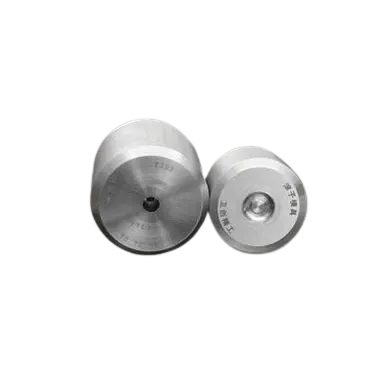
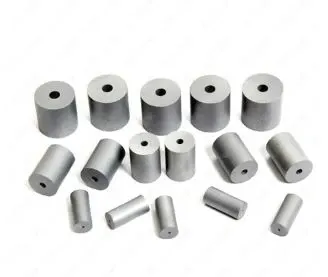
Tungsten carbide offers superior hardness, wear resistance, and heat resistance compared to high - speed steel. This means that Carbide Cold Heading Dies can withstand higher pressures and temperatures during the cold heading process. As a result, they have a longer service life, reducing the frequency of die replacement. This not only saves costs for our customers but also increases the overall productivity of their cold heading operations.
For example, in a high - volume production environment where thousands of parts are produced daily, the use of carbide cold heading dies can lead to significant savings in tooling costs over time. The reduced downtime for die changes also means that the production line can operate more continuously, resulting in higher output.
2. Precision Manufacturing Techniques
New manufacturing technologies have enabled us to produce cold heading dies with unprecedented precision. Computer - Numerical Control (CNC) machining is a prime example. CNC machines use computer - controlled tools to cut and shape the die material with extremely high accuracy.
This precision is crucial in cold heading dies because even the slightest deviation in dimensions can affect the quality of the finished parts. With CNC machining, we can achieve tight tolerances, ensuring that the dies produce parts that meet the exact specifications of our customers. For instance, in the production of small, intricate fasteners, the precise shaping of the die cavity is essential to create parts with the correct thread pitch, head shape, and overall dimensions.
In addition to CNC machining, Electrical Discharge Machining (EDM) is another technology that has improved die manufacturing. EDM uses electrical discharges to erode the material and create complex shapes that would be difficult or impossible to achieve with traditional machining methods. This allows us to design and manufacture cold heading dies with more intricate geometries, which can be used to produce a wider range of cold - headed parts.
3. Surface Coating Technologies
Surface coating is a technology that has had a profound impact on the performance of cold heading dies. Coatings such as Titanium Nitride (TiN), Titanium Carbonitride (TiCN), and Diamond - Like Carbon (DLC) can be applied to the surface of the dies to enhance their properties.
TiN coating, for example, provides a hard, wear - resistant surface that reduces friction between the die and the workpiece. This not only improves the lifespan of the die but also results in better - quality parts. The reduced friction means that there is less material adhesion to the die surface, which can cause defects in the finished parts.
TiCN coating offers even better wear resistance and thermal stability compared to TiN. It is particularly suitable for high - speed cold heading operations where the dies are subjected to high temperatures and pressures. DLC coating, on the other hand, has excellent lubricity, which further reduces friction and wear. It can be used in applications where low - friction is critical, such as in the production of parts with smooth surfaces.
By applying these advanced coatings to our Cold Heading Punches and dies, we can improve their performance and extend their service life, providing our customers with more reliable and cost - effective tooling solutions.
4. Simulation and Modeling Technologies
Simulation and modeling technologies have become invaluable tools in the design and optimization of cold heading dies. Finite Element Analysis (FEA) is a widely used technique that allows us to simulate the cold heading process and predict how the die and the workpiece will behave under different conditions.
Using FEA, we can analyze factors such as stress distribution, deformation, and temperature changes during the cold heading process. This information helps us to identify potential problems in the die design, such as areas of high stress that could lead to premature failure. By making adjustments to the design based on the simulation results, we can improve the die's performance and durability.
For example, if the simulation shows that a particular area of the die is experiencing excessive stress, we can modify the die geometry or change the material properties in that area to reduce the stress. This proactive approach to die design can save time and money by avoiding costly trial - and - error processes during the manufacturing phase.
In addition to FEA, computer - aided design (CAD) software also plays a vital role in die design. CAD allows us to create detailed 3D models of the dies, which can be easily modified and shared with our customers. This enables us to collaborate more effectively with our customers, ensuring that the final die design meets their specific requirements.
5. Improved Lubrication Systems
New technologies have also led to the development of improved lubrication systems for cold heading operations. Effective lubrication is essential in cold heading to reduce friction, prevent material adhesion, and dissipate heat.
Modern lubricants are formulated with advanced additives that provide better lubricity and anti - wear properties. For example, some lubricants contain nano - particles that can form a protective film on the die and workpiece surfaces, reducing friction and wear.
In addition to the lubricants themselves, the delivery systems have also been improved. Automatic lubrication systems can precisely control the amount and location of the lubricant application. This ensures that the dies are properly lubricated at all times, even during high - speed production.
The use of improved lubrication systems not only improves the performance of the cold heading dies but also contributes to the quality of the finished parts. By reducing friction and wear, the parts are less likely to have surface defects, and their mechanical properties are also more consistent.
6. Predictive Maintenance Using IoT
The Internet of Things (IoT) has made its way into the cold heading industry, enabling us to implement predictive maintenance strategies for cold heading dies. IoT sensors can be installed on the dies or the cold heading machines to collect data on various parameters such as temperature, vibration, and pressure.
This data can then be analyzed using machine learning algorithms to predict when a die is likely to fail. By detecting early signs of wear or damage, we can schedule maintenance or die replacement in advance, preventing unexpected breakdowns and reducing production downtime.
For example, if the sensor data shows an increase in vibration levels, it could indicate that the die is starting to wear or that there is a problem with the machine setup. By addressing these issues early, we can avoid costly damage to the die and the production equipment.
Conclusion
In conclusion, new technologies have had a profound impact on the performance of cold heading dies. From advanced materials and precision manufacturing techniques to surface coatings, simulation technologies, improved lubrication, and IoT - enabled predictive maintenance, these advancements have made our cold heading dies more durable, precise, and cost - effective.
As a supplier of cold heading dies, we are committed to staying at the forefront of these technological developments. We continuously invest in research and development to incorporate the latest technologies into our products, ensuring that we can provide our customers with the highest - quality cold heading solutions.
If you are in the market for Cold Heading Punches, Carbide Cold Heading Dies, or other Cold Forming/forging Tools, we invite you to contact us to discuss your specific requirements. Our team of experts is ready to work with you to find the best tooling solutions for your cold heading operations.
References
- Kalpakjian, S., & Schmid, S. R. (2008). Manufacturing Engineering and Technology. Pearson Prentice Hall.
- Totten, G. E., & MacKenzie, D. E. (2003). Handbook of Tool and Manufacturing Engineering Technology. CRC Press.
- Boothroyd, G., Dewhurst, P., & Knight, W. A. (2011). Product Design for Manufacture and Assembly. CRC Press.