
Hey there! I'm a supplier of Cold Heading Punches, and today I wanna dive into a comparison between Cold Heading Punches and hot - heading tools.
Let's start by understanding what cold heading and hot heading are. Cold heading is a process where metal is shaped at room temperature. It's a pretty efficient way to make parts like bolts, screws, and rivets. On the other hand, hot heading involves heating the metal to a high temperature before shaping it. This method is often used for larger and more complex parts.
Performance and Precision
One of the big advantages of Cold Heading Punches is the precision they offer. Since the process happens at room temperature, there's less chance of the metal deforming due to heat. This means we can achieve really tight tolerances, which is super important for industries where precision matters, like automotive and aerospace. For example, when making small, intricate parts for a car engine, the accuracy provided by Cold Heading Punches can make all the difference.
Hot - heading tools, however, are better suited for parts that require significant shape changes. When the metal is heated, it becomes more malleable, allowing for more complex geometries. But this comes at a cost. The high temperature can cause some distortion, and it's harder to control the final dimensions as precisely as with cold heading.
Cost - effectiveness
Cold heading is generally more cost - effective in the long run. There's no need for expensive heating equipment, and the energy consumption is much lower. Also, the production speed is often faster because we don't have to wait for the metal to heat up and cool down. This means we can produce more parts in less time, which is great for meeting large - scale production demands.
Hot - heading, on the other hand, requires a lot of energy to heat the metal. The heating equipment is also quite costly to purchase and maintain. Plus, the slower production speed due to the heating and cooling cycles can drive up the overall cost.
Tool Life
Cold Heading Punches usually have a longer tool life. Since there's no exposure to high temperatures, there's less wear and tear on the tools. They can withstand a large number of cycles before needing to be replaced. This is a huge plus for manufacturers as it reduces the frequency of tool changes and downtime.
Hot - heading tools, unfortunately, face more challenges. The high temperatures can cause the tools to expand and contract, leading to fatigue and eventually failure. They also need to be made from materials that can withstand the extreme heat, which can be more expensive.
Material Compatibility
Cold Heading Punches work well with a wide range of materials, including steel, aluminum, and brass. These materials are relatively easy to shape at room temperature, and the cold - heading process can enhance their mechanical properties.
Hot - heading tools are more versatile when it comes to working with harder and more brittle materials. By heating the metal, we can make these materials more workable. For example, some high - strength alloys that would be difficult to shape using cold heading can be successfully formed using hot heading.
Surface Finish
Cold - headed parts typically have a better surface finish. Since there's no oxidation or scale formation due to heat, the parts come out smooth and clean. This is important for applications where aesthetics or a good surface finish is required, like in consumer products.
Hot - headed parts may have a rougher surface due to the oxidation that occurs at high temperatures. Additional finishing processes may be required to achieve the desired surface quality, which adds to the overall cost and production time.
Applications
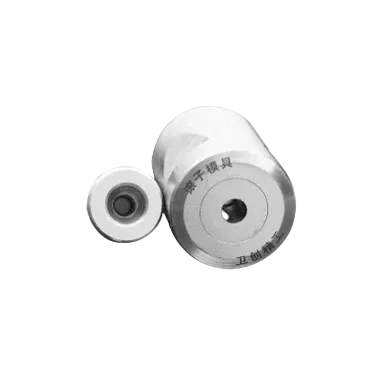
Cold Heading Punches are commonly used in the production of fasteners, such as bolts, nuts, and screws. They're also used in the manufacturing of small precision parts for electronics and medical devices. The Cold Heading Punches we supply are designed to meet the high - quality standards required for these applications.
Hot - heading tools, on the other hand, are often used in the production of large forgings, like crankshafts and connecting rods in the automotive industry. They're also used for making parts for heavy machinery and construction equipment.
Cutting - edge Tools in Cold Heading
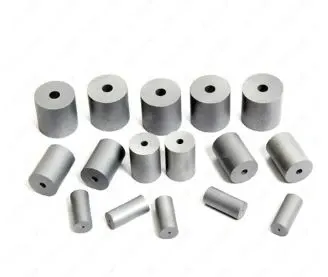
In the cold - heading world, we also have some really cool tools like the Carbidecut Off Die COD. This tool is used to cut off the formed part from the metal rod. It's made of carbide, which is extremely hard and wear - resistant, ensuring a long tool life and clean cuts.
Cold - forming and forging also rely on a variety of Cold Forming/forging Tools. These tools are designed to shape the metal precisely and efficiently, taking advantage of the benefits of cold heading.
So, which is better - Cold Heading Punches or hot - heading tools? Well, it really depends on the specific requirements of the project. If you need high precision, a good surface finish, and cost - effective production, Cold Heading Punches are the way to go. But if you're dealing with complex shapes and harder materials, hot - heading tools might be more suitable.
As a supplier of Cold Heading Punches, I'm always here to help you make the right choice for your manufacturing needs. Whether you're a small - scale workshop or a large - scale production facility, we can provide you with high - quality tools that meet your requirements. If you're interested in learning more about our Cold Heading Punches or other cold - heading tools, don't hesitate to reach out. Let's have a chat and see how we can work together to improve your production process and reduce costs.
References
- ASM Handbook: Volume 14A - Metalworking: Bulk Forming
- Machinery's Handbook 31st Edition