
Hey there! As a supplier of Metric Steel Balls, I often get asked about how we test the quality of these little but crucial components. In this blog, I'll walk you through the whole process, sharing the ins and outs of ensuring that the Metric Steel Balls we offer meet the highest standards.
First off, let's talk about what Metric Steel Balls are. They're used in a wide range of applications, from industrial machinery to automotive parts. These balls need to be precise and durable because they play a vital role in the smooth operation of various equipment. You can check out more about them on our Metric Steel Ball page.
Dimensional Accuracy Testing
One of the most fundamental aspects of quality testing is checking the dimensional accuracy of the steel balls. We use high - precision measuring tools like micrometers and calipers. These tools allow us to measure the diameter of the balls to an extremely accurate degree. For metric steel balls, even the slightest deviation from the specified diameter can cause problems in the equipment they're used in.
We have a set of strict tolerance levels. For example, in some high - precision applications, the tolerance for the diameter of a steel ball might be as small as a few micrometers. If a ball doesn't meet these tolerance requirements, it's rejected right away. We also check the roundness of the balls. A perfectly round ball is essential for smooth rolling and even distribution of forces. Specialized roundness testers are used to measure how close the ball is to a perfect sphere. Any irregularities in the shape can lead to uneven wear and tear, reducing the lifespan of both the ball and the equipment it's in.
Surface Finish Inspection
The surface finish of a metric steel ball is another critical factor. A smooth surface reduces friction and wear, which is especially important in applications where the balls are constantly in motion. We use optical microscopes and surface roughness testers to examine the surface of the balls.
Under the microscope, we can detect any surface defects such as cracks, pits, or scratches. These defects can not only affect the performance of the ball but also lead to premature failure. The surface roughness tester measures the microscopic irregularities on the surface of the ball. We aim for a very low surface roughness value, which indicates a smooth surface. A rough surface can cause noise, vibration, and increased energy consumption in the equipment.
Hardness Testing
Hardness is a key property of metric steel balls. A ball that's too soft will deform easily under load, while a ball that's too hard might be brittle and prone to cracking. We use hardness testing machines to measure the hardness of the balls.
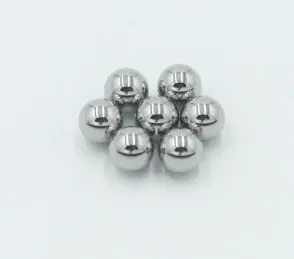
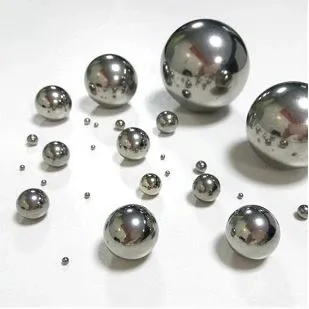
There are different methods of hardness testing, but the most common one we use is the Rockwell hardness test. In this test, a small indenter is pressed into the surface of the ball with a specific force, and the depth of the indentation is measured. Based on this measurement, we can determine the hardness of the ball. We ensure that the hardness of our metric steel balls falls within a specific range that's suitable for their intended applications. You can find out more about high - quality steel balls on our Precision Steel Balls page.
Material Composition Analysis
The material composition of the steel used to make the balls is also carefully analyzed. We use spectroscopy techniques to determine the exact chemical composition of the steel. Different elements in the steel can have a significant impact on the properties of the ball.
For example, carbon content affects the hardness and strength of the steel. Too much carbon can make the steel brittle, while too little can result in a soft and weak ball. Other elements like chromium, nickel, and molybdenum can improve the corrosion resistance and toughness of the steel. By analyzing the material composition, we can ensure that the steel used in our metric steel balls has the right combination of elements to meet the performance requirements.
Fatigue Resistance Testing
In many applications, metric steel balls are subjected to repeated loading and unloading cycles. This can lead to fatigue failure over time. To test the fatigue resistance of our balls, we use fatigue testing machines.
These machines simulate the real - world loading conditions that the balls will experience in their intended applications. The balls are placed under a cyclic load, and the number of cycles they can withstand before failure is recorded. We set a minimum number of cycles that our balls must be able to endure. This ensures that they have a long service life and can perform reliably in demanding environments.
Corrosion Resistance Testing
If the metric steel balls are going to be used in environments where they're exposed to moisture, chemicals, or other corrosive substances, corrosion resistance is a must. We conduct corrosion resistance tests to evaluate how well the balls can withstand these conditions.
One common test is the salt spray test. In this test, the balls are placed in a chamber where they're exposed to a fine mist of saltwater. The length of time the balls can be in the chamber without showing signs of corrosion is measured. Based on the results, we can determine the corrosion resistance level of the balls. We also use different coatings and treatments to improve the corrosion resistance of our balls when necessary. You can learn more about metal balls and their properties on our Metal Ball page.
Batch Testing and Statistical Process Control
We don't just test individual balls; we also conduct batch testing. We take random samples from each production batch and perform all the above - mentioned tests on these samples. This helps us ensure the consistency of the quality across the entire batch.
We use statistical process control (SPC) methods to monitor the production process. By collecting and analyzing data from the testing results, we can identify any trends or variations in the quality of the balls. If there are any signs of a potential quality issue, we can take corrective actions immediately, such as adjusting the production parameters or replacing worn - out equipment.
In conclusion, testing the quality of metric steel balls is a comprehensive and rigorous process. We spare no effort to ensure that every ball we supply meets the highest quality standards. Whether you're in the automotive industry, the aerospace sector, or any other field that requires high - performance steel balls, you can trust us to provide you with the best products.
If you're interested in purchasing metric steel balls or have any questions about our products, don't hesitate to get in touch. We're always ready to have a chat and discuss your specific requirements.
References
- ASTM International standards for steel ball manufacturing and testing
- Technical literature on rolling element bearings and precision components