
Hey there! As a supplier of ball bearing balls, I'm super excited to take you behind the scenes and show you how these little wonders are made. Ball bearing balls play a crucial role in countless applications, from automotive engines to industrial machinery, and even in everyday items like skateboards. So, let's dive right in and explore the manufacturing process!
Starting with the Raw Materials
The first step in making ball bearing balls is selecting the right raw materials. We use a variety of materials depending on the specific requirements of the application. Some of the most common materials include high chrome steel, metal, and 316 stainless steel.
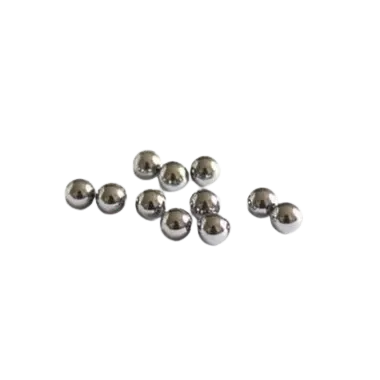
High Chrome Steel Balls are known for their high hardness and wear resistance, making them ideal for applications that require high precision and long service life. They are commonly used in automotive engines, aerospace components, and industrial machinery.
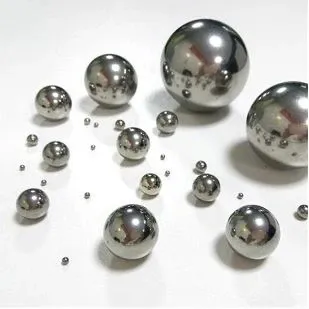
Metal Ball is a general term that refers to balls made from various metals, such as carbon steel, alloy steel, and stainless steel. Metal balls are widely used in a variety of applications, including bearings, valves, pumps, and electrical contacts.
316 Stainless Steel Balls are highly corrosion-resistant and have excellent mechanical properties. They are commonly used in applications where corrosion resistance is critical, such as in marine environments, food processing equipment, and medical devices.
Cutting and Forming
Once the raw materials are selected, the next step is to cut and form them into the desired shape. This is typically done using a process called cold heading or hot forging.
Cold heading is a process in which the raw material is cut into small pieces and then shaped into a ball using a series of dies. The dies are designed to apply pressure to the material, causing it to flow and take on the shape of the ball. Cold heading is a fast and efficient process that can produce high-quality balls with tight tolerances.
Hot forging is a similar process, but it involves heating the raw material to a high temperature before shaping it into a ball. This makes the material more malleable and easier to form. Hot forging is typically used for larger balls or balls that require a high degree of precision.
Heat Treatment
After the balls are formed, they are heat-treated to improve their hardness, strength, and wear resistance. Heat treatment involves heating the balls to a specific temperature and then cooling them at a controlled rate. This process changes the microstructure of the material, making it harder and more durable.
There are several different heat treatment processes that can be used, depending on the type of material and the desired properties of the balls. Some of the most common heat treatment processes include quenching, tempering, and annealing.
Grinding and Polishing
Once the balls are heat-treated, they are ground and polished to achieve the desired surface finish and dimensional accuracy. Grinding is a process in which the balls are placed in a grinding machine and rotated against a grinding wheel. The grinding wheel removes a small amount of material from the surface of the balls, making them smoother and more precise.
Polishing is a similar process, but it uses a finer abrasive to achieve an even smoother surface finish. Polishing is typically used for balls that require a high degree of surface finish, such as in precision bearings or optical applications.
Inspection and Quality Control
Before the balls are shipped to customers, they are inspected and tested to ensure that they meet the required quality standards. This includes checking the size, shape, surface finish, hardness, and material composition of the balls.
There are several different inspection methods that can be used, depending on the type of balls and the required level of quality control. Some of the most common inspection methods include visual inspection, dimensional inspection, hardness testing, and material analysis.
Conclusion
So, there you have it! That's how ball bearing balls are manufactured. As you can see, it's a complex and precise process that requires a lot of skill and expertise. At our company, we take pride in producing high-quality ball bearing balls that meet the needs of our customers.
If you're in the market for ball bearing balls, we'd love to hear from you. Whether you need a small quantity of custom-made balls or a large order of standard balls, we can help. Just contact us to discuss your requirements and get a quote. We look forward to working with you!
References
- ASM Handbook, Volume 14A: Metalworking: Bulk Forming. ASM International, 2013.
- Fundamentals of Modern Manufacturing: Materials, Processes, and Systems. Mikell P. Groover, 2010.
- Manufacturing Engineering & Technology. Serope Kalpakjian and Steven R. Schmid, 2014.