
Do inch steel balls have a uniform density? Well, let me tell you, as a supplier of inch steel balls, this is a question I get asked a lot. Today, I'm gonna dive deep into this topic and share some insights based on my experience in the industry.
First off, let's understand what we mean by density. Density is basically how much mass is packed into a given volume. In the case of steel balls, it's all about how much steel is in that little spherical shape. Now, when it comes to uniform density, we're talking about whether the density is the same all throughout the ball.
When we manufacture inch steel balls, we aim for uniformity. The process starts with high - quality steel materials. We carefully select the type of steel, whether it's carbon steel, stainless steel, or some other alloy. Each type has its own properties, and these can affect the density. For example, Stainless Steel Ball are often used in applications where corrosion resistance is crucial. They contain elements like chromium and nickel, which can change the density compared to regular carbon steel balls.
During the manufacturing process, we use techniques like forging and cold heading to shape the steel into balls. These processes are designed to ensure that the steel is evenly distributed within the ball. But here's the thing, achieving perfect uniformity is a bit of a challenge. There can be small variations in the density due to a few factors.
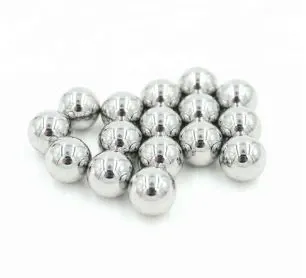

One factor is impurities in the steel. No matter how careful we are with the raw materials, there can always be some tiny impurities. These impurities might be things like trace elements or small foreign particles. They can cause local variations in density. However, we have strict quality control measures in place to minimize these issues. We test the steel before the manufacturing process and also inspect the finished balls.
Another factor is the heat treatment. Heat treatment is an important step in making steel balls harder and more durable. But different heat treatment processes can also affect the density. If the ball is heated and cooled unevenly, it can lead to density differences within the ball. Our team of experts carefully controls the heat treatment parameters to try and maintain as much uniformity as possible.
Let's talk a bit about the applications of inch steel balls. They are used in a wide range of industries, from automotive to aerospace. In automotive applications, Large Steel Ball are often used in steering systems and transmissions. In these critical applications, having a uniform density is super important. A non - uniform density can lead to uneven wear and tear, which can affect the performance and safety of the vehicle.
In the aerospace industry, the requirements for uniformity are even stricter. The components in an aircraft need to be as precise as possible. Weldable steel balls, like the ones you can find at Weldable Steel Balls, are used in various aerospace assemblies. Any density variations could potentially lead to structural weaknesses, and that's a big no - no when you're thousands of feet in the air.
Now, you might be wondering how we measure the density of these steel balls. We use a variety of methods. One common method is the Archimedes' principle. We measure the mass of the ball and then its volume by submerging it in a liquid. By dividing the mass by the volume, we get the density. We also use advanced non - destructive testing techniques like ultrasonic testing. This helps us detect any internal defects or density variations without damaging the ball.
In most cases, our inch steel balls have a very high degree of density uniformity. We've spent years perfecting our manufacturing processes and quality control systems. But it's important to note that there will always be some very minor variations. These variations are usually within an acceptable range, depending on the specific application.
If you're in the market for inch steel balls, whether it's for a high - precision aerospace project or a more general industrial application, we've got you covered. Our team of experts can help you choose the right type of steel ball based on your requirements. We can also provide you with detailed information about the density and other properties of the balls.
So, if you're interested in learning more or are thinking about making a purchase, don't hesitate to reach out. We're here to answer all your questions and work with you to find the best solution for your needs.
References
- "Materials Science and Engineering: An Introduction" by William D. Callister Jr. and David G. Rethwisch
- Industry research reports on steel ball manufacturing