
Do Din 5401 Steel Balls Need Lubrication During Use?
As a supplier of Din 5401 steel balls, I often encounter questions from customers regarding the lubrication requirements of these precision components. Din 5401 steel balls are widely used in various industries, including automotive, aerospace, and machinery manufacturing, due to their high precision, durability, and excellent mechanical properties. In this blog post, I will delve into the topic of whether Din 5401 steel balls need lubrication during use, exploring the factors that influence this decision and the benefits of proper lubrication.
Understanding Din 5401 Steel Balls
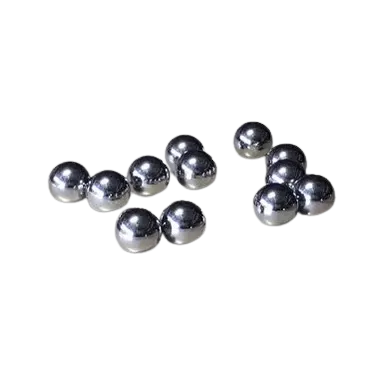
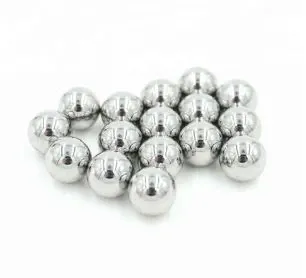
Before discussing the lubrication requirements, it is essential to understand the characteristics of Din 5401 steel balls. These steel balls are manufactured in accordance with the DIN 5401 standard, which specifies the dimensional tolerances, roundness, and surface finish of the balls. They are typically made from high - quality steel alloys, such as High Chrome Steel Balls, Stainless Steel Ball, or Solid Steel Balls, which provide them with high hardness, wear resistance, and corrosion resistance.
The high precision of Din 5401 steel balls makes them suitable for applications where smooth and accurate movement is required, such as in bearings, ball screws, and linear guides. Their durability ensures a long service life, even under high - load and high - speed conditions.
Factors Influencing the Need for Lubrication
Several factors determine whether Din 5401 steel balls need lubrication during use. These factors include the application environment, the operating conditions, and the type of steel used in the balls.
Application Environment
The application environment plays a crucial role in determining the lubrication requirements. In clean and dry environments, where there is little dust, dirt, or moisture, the need for lubrication may be reduced. However, in harsh environments, such as those with high levels of dust, dirt, or corrosive substances, lubrication is often necessary to protect the steel balls from wear and corrosion.
For example, in mining and construction equipment, where the steel balls are exposed to large amounts of dust and dirt, lubrication helps to prevent the accumulation of abrasive particles on the ball surfaces, which can cause premature wear and failure. Similarly, in marine applications, where the steel balls are exposed to saltwater and humidity, lubrication provides a protective barrier against corrosion.
Operating Conditions
The operating conditions, such as load, speed, and temperature, also influence the need for lubrication. High - load applications require lubrication to reduce the friction and wear between the steel balls and the mating surfaces. When a high load is applied, the contact pressure between the balls and the surfaces increases, which can lead to surface damage if there is insufficient lubrication.
High - speed applications also benefit from lubrication. At high speeds, the friction between the steel balls and the mating surfaces generates heat, which can cause thermal expansion and reduce the accuracy of the system. Lubrication helps to dissipate the heat and maintain the stability of the system.
Temperature is another important factor. In high - temperature applications, the lubricant must have a high flash point and good thermal stability to prevent it from breaking down. In low - temperature applications, the lubricant must remain fluid to ensure proper lubrication.
Type of Steel
The type of steel used in the Din 5401 steel balls can also affect the lubrication requirements. Some types of steel, such as stainless steel, have better corrosion resistance than others, which may reduce the need for lubrication in certain environments. However, even stainless steel balls may require lubrication in high - load or high - speed applications to reduce friction and wear.
Benefits of Lubrication
When lubrication is necessary, it offers several benefits for Din 5401 steel balls.
Reduced Friction and Wear
Lubrication forms a thin film between the steel balls and the mating surfaces, which reduces the direct contact and friction between them. This, in turn, reduces wear on the ball surfaces and extends their service life. By minimizing wear, lubrication helps to maintain the precision and performance of the system over time.
Heat Dissipation
As mentioned earlier, friction generates heat in high - speed and high - load applications. Lubrication helps to dissipate this heat, preventing the steel balls and the mating surfaces from overheating. Overheating can cause thermal expansion, which can lead to dimensional changes and reduced accuracy in the system. By keeping the temperature under control, lubrication ensures the stability and reliability of the system.
Corrosion Protection
In corrosive environments, lubrication provides a protective barrier between the steel balls and the corrosive substances. This barrier prevents the formation of rust and other corrosion products on the ball surfaces, which can damage the balls and affect their performance.
Noise Reduction
Lubrication can also reduce the noise generated by the movement of the steel balls. By reducing friction and vibration, lubrication helps to create a smoother and quieter operation, which is particularly important in applications where noise levels need to be minimized, such as in automotive and aerospace industries.
Types of Lubricants
There are several types of lubricants available for Din 5401 steel balls, including oils, greases, and solid lubricants.
Oils
Oils are a common type of lubricant for steel balls. They offer excellent lubrication properties and are suitable for high - speed applications. Oils can be easily applied and removed, and they can be circulated through the system to provide continuous lubrication. However, oils may require a more complex lubrication system, such as a pump and a filter, to ensure proper distribution.
Greases
Greases are a semi - solid lubricant that consists of a base oil and a thickener. They are easy to apply and can provide long - term lubrication without the need for a complex lubrication system. Greases are suitable for applications where the steel balls are not exposed to high - speed or high - load conditions. However, they may not be as effective as oils in dissipating heat.
Solid Lubricants
Solid lubricants, such as graphite and molybdenum disulfide, are used in applications where traditional lubricants are not suitable, such as in high - temperature or high - vacuum environments. Solid lubricants can be applied as a coating on the steel ball surfaces or used in the form of a powder.
Conclusion
In conclusion, whether Din 5401 steel balls need lubrication during use depends on various factors, including the application environment, the operating conditions, and the type of steel used. In many cases, lubrication is necessary to ensure the optimal performance, durability, and reliability of the steel balls.
As a supplier of Din 5401 steel balls, I am committed to providing my customers with high - quality products and professional advice on lubrication. If you are considering using Din 5401 steel balls in your application, I encourage you to contact me to discuss your specific requirements. We can work together to determine the most suitable lubrication solution for your needs, ensuring the long - term success of your project.
References
- Budynas, R. G., & Nisbett, J. K. (2011). Shigley's Mechanical Engineering Design. McGraw - Hill.
- Harris, T. A., & Kotzalas, M. N. (2007). Rolling Bearing Analysis. John Wiley & Sons.
- Zorzi, A., & Fillon, M. (2016). Tribology of Rolling Element Bearings. Elsevier.