
Hey there! As a supplier of Din 5401 steel balls, I often get asked about their impact - absorption capacity. So, I thought I'd write this blog to share some insights on this topic.
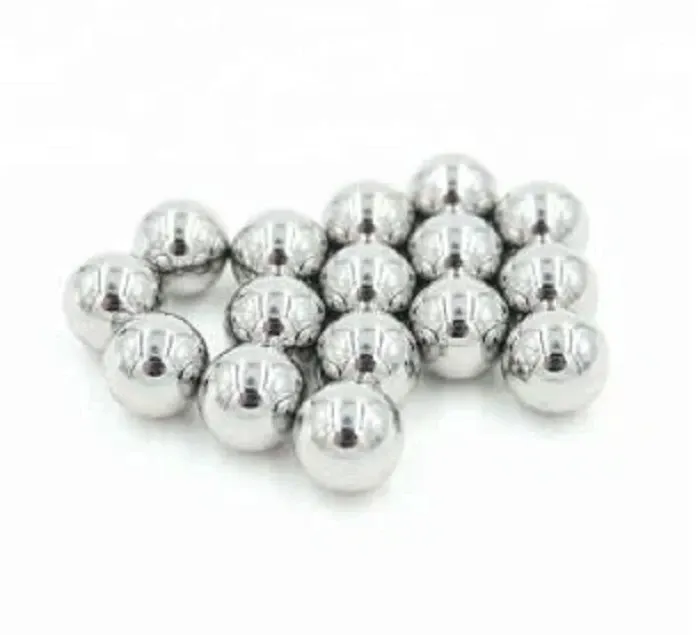
First off, let's understand what Din 5401 steel balls are. Din 5401 is a standard that defines the requirements for steel balls used in various industrial applications. These steel balls are known for their high precision and quality. They're used in a wide range of products, from bearings to ball screws, and even in some high - end machinery.
Now, onto the big question: do Din 5401 steel balls have a good impact - absorption capacity? Well, it depends on a few factors.
Material Properties
The material of the steel ball plays a huge role in its impact - absorption capacity. Din 5401 steel balls are typically made from high - quality steel alloys. These alloys are designed to have a good balance of hardness and toughness. Hardness is important because it allows the ball to resist deformation under load. But too much hardness can make the ball brittle, which is not good for impact absorption.
Toughness, on the other hand, is the ability of the material to absorb energy before fracturing. A tough material can withstand sudden impacts without breaking. Most Din 5401 steel balls are heat - treated to achieve the right balance of hardness and toughness. This heat treatment process involves heating the balls to a specific temperature and then cooling them at a controlled rate. This results in a microstructure that gives the balls good mechanical properties.
Size and Shape
The size and shape of the steel ball also affect its impact - absorption capacity. Generally, larger balls have more mass, which means they can absorb more energy during an impact. However, if the ball is too large, it may not be able to fit into the application properly.
The shape of the ball is also crucial. A perfectly spherical ball will distribute the impact force evenly across its surface. Any deviation from a perfect sphere can cause uneven stress distribution, which may lead to premature failure of the ball. Din 5401 standards ensure that the balls have a high degree of roundness and surface finish, which helps in better impact absorption.
Application Environment
The environment in which the steel ball is used is another important factor. In some applications, the balls are subjected to repeated impacts at high frequencies. For example, in a ball bearing that is used in a high - speed motor, the balls are constantly hitting the raceways. In such cases, the impact - absorption capacity of the balls needs to be high to prevent wear and tear.
On the other hand, in a low - speed application where the impacts are less frequent, the requirements for impact absorption may not be as strict. So, it's important to consider the specific application when evaluating the impact - absorption capacity of Din 5401 steel balls.
Comparing with Other Types of Steel Balls
Let's compare Din 5401 steel balls with some other common types of steel balls.
Chorme Steel Ball are known for their high hardness and corrosion resistance. However, they may not have the best impact - absorption capacity compared to Din 5401 steel balls. The high hardness of chrome steel balls can make them more brittle, which means they may crack under high - impact loads.
Precision Steel Balls are similar to Din 5401 steel balls in terms of precision. But the impact - absorption capacity can vary depending on the material and manufacturing process. Some precision steel balls are made for applications where high precision is the key, and their impact - absorption properties may not be optimized.
Stainless Steel Ball are corrosion - resistant, which is great for applications in wet or corrosive environments. However, stainless steel generally has lower impact - absorption capacity compared to the steel used in Din 5401 steel balls. This is because stainless steel has a different microstructure and alloy composition.
Real - World Testing
To really understand the impact - absorption capacity of Din 5401 steel balls, real - world testing is essential. At our company, we conduct various tests to ensure that our steel balls meet the required standards.
One of the tests we use is the drop test. In this test, a steel ball is dropped from a specific height onto a hard surface, and we measure the amount of energy absorbed by the ball. We also look for any signs of deformation or cracking on the ball after the impact.
Another test is the fatigue test. In this test, the ball is subjected to repeated impacts over a long period of time. This simulates the real - world conditions in which the ball will be used. By monitoring the performance of the ball during the fatigue test, we can get an idea of its long - term impact - absorption capacity.
Conclusion
So, do Din 5401 steel balls have a good impact - absorption capacity? In most cases, the answer is yes. Thanks to their high - quality material, proper heat treatment, and strict manufacturing standards, these steel balls are designed to absorb impacts effectively.
However, it's important to note that the impact - absorption capacity can vary depending on the specific application and the requirements of the customer. If you're looking for steel balls with excellent impact - absorption properties for your application, it's a good idea to get in touch with us. We can help you choose the right type of Din 5401 steel balls based on your needs.
Whether you're in the automotive industry, the aerospace industry, or any other industry that requires high - quality steel balls, we've got you covered. Our team of experts can provide you with all the information you need and help you make an informed decision.
If you're interested in purchasing Din 5401 steel balls or have any questions about their impact - absorption capacity, feel free to reach out. We're here to assist you in finding the best solution for your application.
References
- "Handbook of Steel Balls and Their Applications"
- "Materials Science and Engineering: An Introduction" by William D. Callister Jr. and David G. Rethwisch
- Industry standards and research papers on steel ball manufacturing and performance