
As a seasoned supplier of Needle Rollers, I often encounter inquiries from clients in various industries, one of the most intriguing being the feasibility of using Needle Rollers in a vacuum environment. This question not only reflects the diverse application scenarios of our products but also challenges us to explore the technical boundaries of Needle Rollers. In this blog, I will delve into the technical aspects, advantages, challenges, and potential solutions regarding the use of Needle Rollers in a vacuum environment.
Technical Background of Needle Rollers
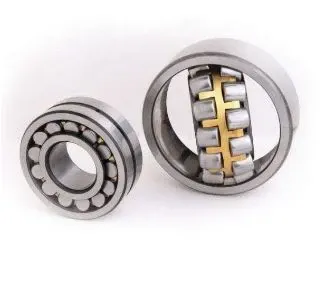
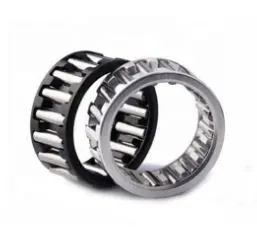
Needle Rollers are a type of cylindrical rolling element with a high length - to - diameter ratio. They are designed to provide high load - carrying capacity within a limited space. Compared to other rolling elements such as Spherical Rollers and Taper Rollers, Needle Rollers have a unique geometric shape that allows them to distribute loads more evenly over a larger contact area. This characteristic makes them ideal for applications where space is restricted, and high radial loads need to be supported.
In a typical environment, Needle Rollers operate smoothly with the help of lubricants. Lubrication reduces friction, dissipates heat, and protects the surfaces of the rollers and raceways from wear and corrosion. However, the situation changes significantly in a vacuum environment.
Advantages of Using Needle Rollers in a Vacuum
- High Load - Carrying Capacity: In vacuum applications such as space exploration equipment, semiconductor manufacturing, and vacuum coating machines, there is often a need to support heavy loads in a limited space. Needle Rollers, with their high length - to - diameter ratio, can provide a large contact area, enabling them to handle high radial loads effectively. This is crucial for ensuring the stability and reliability of the equipment in a vacuum environment.
- Compact Design: The compact size of Needle Rollers is a significant advantage in vacuum systems, where space is at a premium. Their small footprint allows for more efficient use of the available space, enabling the design of more compact and lightweight equipment. This is particularly important in aerospace applications, where reducing weight is a key factor in improving fuel efficiency and overall performance.
- Low Friction and Wear: Needle Rollers are designed to minimize friction between the rolling elements and the raceways. In a vacuum environment, where traditional lubricants may not be applicable, the low - friction design of Needle Rollers can help reduce energy consumption and extend the service life of the components. This is especially beneficial in long - duration space missions or continuous - operation vacuum manufacturing processes.
Challenges of Using Needle Rollers in a Vacuum
- Lubrication Issues: As mentioned earlier, lubrication is essential for the proper operation of Needle Rollers in a normal environment. However, in a vacuum, traditional liquid lubricants evaporate quickly due to the low pressure, leaving the surfaces of the rollers and raceways dry. This can lead to increased friction, wear, and even seizure of the components.
- Outgassing: Outgassing is the release of gas from solid or liquid materials in a vacuum environment. Many materials used in the manufacturing of Needle Rollers, such as plastics, adhesives, and some metals, can outgas in a vacuum. The released gases can contaminate the vacuum system, affect the performance of other components, and even cause damage to sensitive equipment.
- Thermal Management: In a vacuum, heat dissipation is more challenging compared to a normal environment. Since there is no air to conduct heat away from the components, the heat generated by friction between the Needle Rollers and the raceways can accumulate, leading to an increase in temperature. High temperatures can cause thermal expansion, which may affect the dimensional stability of the components and reduce their performance.
Solutions to Overcome the Challenges
- Solid Lubricants: To address the lubrication issue, solid lubricants can be used instead of traditional liquid lubricants. Solid lubricants such as molybdenum disulfide (MoS₂), graphite, and tungsten disulfide (WS₂) have excellent lubricating properties and can withstand high temperatures and vacuum conditions. These solid lubricants can be applied as coatings on the surfaces of the Needle Rollers and raceways, providing a low - friction and wear - resistant layer.
- Low - Outgassing Materials: Selecting low - outgassing materials is crucial to minimize the impact of outgassing in a vacuum environment. For example, using stainless steel with low carbon content and carefully choosing polymers and adhesives that have been specifically formulated for vacuum applications can significantly reduce the amount of gas released. Additionally, pre - conditioning the components in a vacuum chamber before use can help remove any residual gases and moisture.
- Thermal Design: To manage the heat generated in a vacuum, proper thermal design is necessary. This can include using materials with high thermal conductivity for the components, incorporating heat sinks or cooling channels in the design, and optimizing the geometry of the Needle Rollers and raceways to reduce friction and heat generation.
Case Studies
- Space Exploration: In space exploration, Needle Rollers are used in various mechanisms such as robotic arms, antenna deployment systems, and scientific instrument gimbals. For example, in a recent Mars rover mission, Needle Rollers with solid lubricant coatings were used in the rover's sampling arm. These Needle Rollers were able to withstand the harsh vacuum and low - temperature conditions on Mars, providing reliable operation for the entire mission.
- Semiconductor Manufacturing: In semiconductor manufacturing, vacuum chambers are used for processes such as chemical vapor deposition (CVD) and physical vapor deposition (PVD). Needle Rollers are used in the wafer handling systems within these vacuum chambers. By using low - outgassing materials and solid lubricants, the Needle Rollers can operate smoothly without contaminating the vacuum environment or affecting the quality of the semiconductor wafers.
Conclusion
In conclusion, Needle Rollers can indeed be used in a vacuum environment, but it requires careful consideration of the technical challenges and the implementation of appropriate solutions. The high load - carrying capacity, compact design, and low - friction characteristics of Needle Rollers make them suitable for a wide range of vacuum applications. By addressing the lubrication, outgassing, and thermal management issues, we can ensure the reliable operation of Needle Rollers in these demanding environments.
If you are interested in exploring the use of Needle Rollers in your vacuum applications, I encourage you to reach out to us for a detailed discussion. Our team of experts is ready to provide you with customized solutions based on your specific requirements.
References
- "Rolling Bearing Analysis" by Tedric A. Harris and Michael N. Kotzalas
- "Vacuum Technology Handbook" by P. A. Redhead, J. P. Hobson, and E. V. Kornelsen
- Industry reports and research papers on vacuum applications and rolling element bearings