
Can cylindrical rollers be used in a low - temperature environment? This is a question that many customers often ask us as a leading cylindrical roller supplier. In this blog, we will delve into the feasibility of using cylindrical rollers in low - temperature settings, exploring the technical aspects, advantages, limitations, and precautions.
Technical Characteristics of Cylindrical Rollers
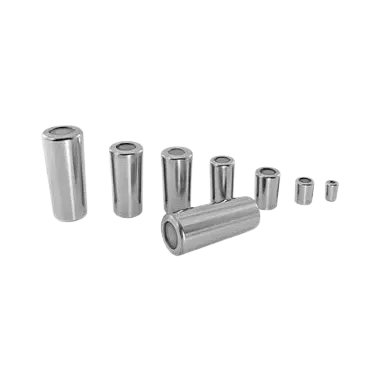
Cylindrical rollers are a type of rolling element widely used in various industrial applications, such as bearings in machinery, automotive components, and conveyor systems. Their design features straight or slightly crowned rolling surfaces, which allow for high radial load - carrying capacity and good guidance within the bearing. The basic structure consists of a cylindrical body made from high - quality bearing steel, often with precision - machined surfaces to ensure smooth rolling and low friction.
The materials used in manufacturing cylindrical rollers play a crucial role in their performance. Most commonly, high - carbon chromium steel (such as GCr15 in China) is used due to its excellent hardness, wear resistance, and fatigue life. However, in some special applications, other materials like stainless steel or ceramic may also be employed.
Effects of Low - Temperature Environment on Cylindrical Rollers
Material Properties
In a low - temperature environment, the material properties of cylindrical rollers can change significantly. One of the most notable changes is the increase in material brittleness. As the temperature drops, the impact toughness of the steel decreases, making the rollers more prone to cracking or chipping under sudden shock loads. For example, at extremely low temperatures, the yield strength of the steel may increase, but its ability to deform plastically before fracture is reduced.
Lubrication
Lubrication is essential for the proper functioning of cylindrical rollers. In low - temperature conditions, the viscosity of lubricants increases. This can lead to several problems. Firstly, high - viscosity lubricants may cause increased friction during the initial startup of the machinery, resulting in higher energy consumption and potential wear on the rollers. Secondly, if the lubricant becomes too thick, it may not be able to flow effectively to all parts of the bearing, leading to insufficient lubrication in some areas and accelerated wear.
Thermal Expansion
Cylindrical rollers and the components they interact with, such as the bearing housing and shaft, will experience thermal contraction in a low - temperature environment. The different coefficients of thermal expansion of these materials can lead to changes in the internal clearances of the bearing. If the clearances become too small, it can cause excessive pre - loading on the rollers, increasing friction and heat generation. Conversely, if the clearances are too large, it can lead to reduced bearing stability and increased noise.
Advantages of Using Cylindrical Rollers in Low - Temperature Environments
Despite the challenges mentioned above, there are also some advantages to using cylindrical rollers in low - temperature settings.
High Load - Carrying Capacity
Cylindrical rollers are designed to handle high radial loads. In low - temperature applications where the machinery may be subjected to heavy loads due to factors such as cold - induced material stiffening, the high load - carrying capacity of cylindrical rollers can be an asset. For example, in refrigeration compressors where components need to operate under high pressure at low temperatures, cylindrical rollers can ensure reliable performance.
Precision and Stability
The precise manufacturing of cylindrical rollers ensures accurate motion transmission. In low - temperature environments where precise control of moving parts is required, such as in aerospace equipment operating in the cold outer space, the stability provided by cylindrical rollers can be crucial for the proper functioning of the system.
Limitations and Precautions
Limitations
As mentioned earlier, the brittleness of the roller material at low temperatures is a major limitation. This restricts the use of cylindrical rollers in applications where sudden impacts or vibrations are likely to occur. Additionally, the lubrication issues can limit the operating speed of the machinery. High - viscosity lubricants may not be able to provide sufficient lubrication at high speeds, leading to increased wear and potential failure.
Precautions
To mitigate the negative effects of low - temperature environments, several precautions can be taken.

- Material Selection: Choose materials with better low - temperature performance. For example, some specialized steels or ceramics are designed to maintain their toughness and other mechanical properties at low temperatures.
- Lubricant Selection: Select lubricants specifically formulated for low - temperature use. These lubricants have lower pour points and better viscosity - temperature characteristics, ensuring proper lubrication even in cold conditions.
- Design Considerations: When designing the bearing system, take into account the thermal expansion and contraction of the materials. Appropriate clearances should be set to accommodate the changes in dimensions due to temperature variations.
Comparison with Other Types of Rollers
It can be helpful to compare cylindrical rollers with other types of rollers in the context of low - temperature applications.
- Interroll Tapered Roller: Tapered rollers are mainly used for applications that require both radial and axial load - carrying capacity. In low - temperature environments, their tapered design may cause more complex stress distribution compared to cylindrical rollers. However, they can be more suitable for applications with combined loads.
- Spherical Roller: Spherical rollers are known for their self - aligning ability. In low - temperature settings, this feature can be beneficial as it can compensate for some of the misalignments caused by thermal expansion or contraction. However, their design may also make them more sensitive to lubrication issues.
- Gravity Taper Roller: Gravity taper rollers are often used in gravity - fed conveyor systems. In low - temperature environments, the changes in material properties and lubrication can affect their rolling performance. Their design may require more careful consideration of the low - temperature effects.
Conclusion
In conclusion, cylindrical rollers can be used in low - temperature environments, but it requires careful consideration of material properties, lubrication, and design factors. While they have some advantages such as high load - carrying capacity and precision, there are also limitations that need to be addressed. By taking appropriate precautions and making informed choices about materials and lubricants, cylindrical rollers can provide reliable performance in a wide range of low - temperature applications.
As a professional cylindrical roller supplier, we have extensive experience in providing solutions for various operating conditions, including low - temperature environments. If you are interested in our products or have any questions about using cylindrical rollers in low - temperature settings, we welcome you to contact us for further discussion and procurement negotiation. We are committed to providing you with the best products and technical support to meet your specific needs.
References
- Harris, T. A., & Kotzalas, M. N. (2007). Rolling Bearing Analysis. Wiley.
- Wang, Q., & Zhang, X. (2015). Research on the performance of rolling bearings in low - temperature environments. Journal of Mechanical Engineering, 51(10), 123 - 130.
- ISO 15312:2003. Rolling bearings - Life adjustment factors for reliability.