
Can cylindrical rollers be used in a heavy - duty application?
In the world of mechanical engineering and industrial applications, the choice of rolling elements is crucial, especially when it comes to heavy - duty operations. As a supplier of cylindrical rollers, I often get asked whether these components are suitable for heavy - duty applications. In this blog, I will delve into the characteristics of cylindrical rollers, compare them with other types of rollers, and analyze their viability in heavy - duty scenarios.
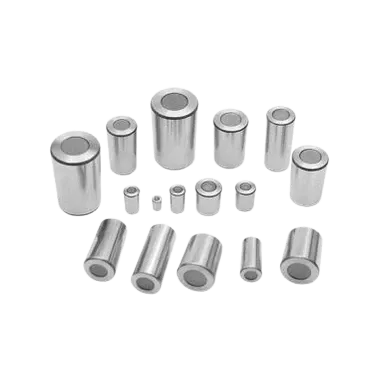

Characteristics of Cylindrical Rollers
Cylindrical rollers are known for their simple yet effective design. They have a straight, cylindrical shape, which allows for a large contact area between the roller and the raceway. This large contact area distributes the load evenly, reducing the stress on individual points of the contact surface. As a result, cylindrical rollers can handle relatively high radial loads.
Another advantage of cylindrical rollers is their high - speed performance. Due to their design, they can rotate at high speeds with relatively low friction. This is because the contact between the roller and the raceway is mainly linear, minimizing the sliding friction that can occur in some other types of rolling elements.
Moreover, cylindrical rollers are relatively easy to manufacture and maintain. Their simple geometry makes them less expensive to produce compared to some more complex roller designs. And when it comes to maintenance, they are straightforward to inspect and replace if necessary.
Comparison with Other Types of Rollers
Spherical Rollers
Spherical Roller have a unique spherical shape that allows them to self - align. This self - alignment feature makes them suitable for applications where there may be misalignment between the shaft and the housing. In heavy - duty applications, this can be a significant advantage in situations where the machinery is subject to vibrations or uneven loading that could cause misalignment.
However, spherical rollers generally have a smaller contact area compared to cylindrical rollers. This means that they may not be as effective at handling extremely high radial loads as cylindrical rollers. In applications where the primary load is radial and the alignment can be maintained, cylindrical rollers may be a better choice.
Taper Rollers
Taper Rollers are designed to handle both radial and axial loads simultaneously. Their tapered shape allows them to distribute the load in a way that can accommodate forces in multiple directions. This makes them ideal for applications such as automotive wheel bearings, where there are both radial forces from the weight of the vehicle and axial forces from cornering.
In heavy - duty applications where there are significant axial loads in addition to radial loads, taper rollers may be more suitable than cylindrical rollers. However, if the load is predominantly radial, cylindrical rollers can provide a more efficient solution in terms of load - carrying capacity and cost.
Interroll Tapered Roller
Interroll Tapered Roller are a specialized type of tapered roller. They are often used in conveyor systems and other applications where smooth and efficient movement is required. These rollers are designed to provide a high level of precision and reliability.
Similar to other tapered rollers, Interroll Tapered Rollers are better at handling combined radial and axial loads. But for heavy - duty applications with mainly radial loads, cylindrical rollers can offer a more cost - effective and straightforward solution.
Suitability for Heavy - Duty Applications
In heavy - duty applications, the key factors to consider are load - carrying capacity, durability, and performance under extreme conditions.
Load - Carrying Capacity
As mentioned earlier, cylindrical rollers have a large contact area, which enables them to handle high radial loads. In heavy - duty machinery such as large industrial presses, mining equipment, and heavy - duty conveyors, the ability to withstand high radial forces is essential. Cylindrical rollers can distribute the load evenly across the contact surface, reducing the risk of premature wear and failure.
Durability
The durability of cylindrical rollers is another important aspect in heavy - duty applications. Their simple design and the use of high - quality materials make them resistant to wear and tear. In harsh environments with high temperatures, dust, and moisture, cylindrical rollers can maintain their performance over a long period. For example, in steel mills where the operating conditions are extremely tough, cylindrical rollers can provide reliable service.
Performance under Extreme Conditions
Cylindrical rollers can also perform well under extreme conditions. They can operate at high speeds with low friction, which is beneficial in heavy - duty applications where high - speed operation is required. Additionally, they can tolerate some level of shock and vibration, although not as well as self - aligning rollers like spherical rollers.
Limitations in Heavy - Duty Applications
While cylindrical rollers have many advantages in heavy - duty applications, they also have some limitations.
Axial Load Handling
Cylindrical rollers are not designed to handle significant axial loads. In applications where there are substantial axial forces, such as in some types of gearboxes or in situations where the machinery is subject to thrust, cylindrical rollers may not be the best choice. In these cases, taper rollers or other types of rollers that can handle axial loads should be considered.
Misalignment Tolerance
Unlike spherical rollers, cylindrical rollers have limited tolerance for misalignment. In heavy - duty applications where misalignment is likely to occur due to factors such as thermal expansion or mechanical stress, the use of cylindrical rollers may lead to premature wear and failure. Therefore, proper alignment and installation are crucial when using cylindrical rollers in heavy - duty settings.
Conclusion
In conclusion, cylindrical rollers can be used in heavy - duty applications, especially when the load is predominantly radial, and the alignment can be maintained. Their large contact area, high - speed performance, and relatively low cost make them a viable option for many heavy - duty machinery and equipment.
However, it is important to consider the specific requirements of the application. If there are significant axial loads or a high likelihood of misalignment, other types of rollers such as spherical rollers or taper rollers may be more appropriate.
As a supplier of cylindrical rollers, I am committed to providing high - quality products that meet the needs of our customers in heavy - duty applications. If you are considering using cylindrical rollers in your heavy - duty machinery or have any questions about the suitability of our products, I encourage you to contact us for a detailed discussion. We can work together to determine the best solution for your specific requirements.
References
- "Rolling Bearing Technology" by SKF
- "Mechanical Design Handbook" by Shigley and Mischke
- Industry reports on heavy - duty machinery components