
Can conical rollers be used in railway vehicles? That's a question I've been getting a lot lately as a supplier of conical rollers. And it's a good one, because railway vehicles are complex machines that require high - performance components to operate safely and efficiently. In this blog, I'll dive into whether conical rollers can have a place in railway vehicles.
First off, let's understand what conical rollers are. Conical rollers, also known as Taper Rollers, have a unique shape. They're wider at one end and narrower at the other. This shape gives them some special properties compared to other types of rollers like Spherical Roller and Cylindrical Roller.
One of the main advantages of conical rollers is their ability to handle both radial and axial loads. In railway vehicles, there are all kinds of forces at play. The weight of the train itself creates a radial load on the bearings, while the forces from acceleration, deceleration, and turning create axial loads. Conical rollers can manage these different types of loads simultaneously, which is a huge plus.
Let's talk about the mechanical environment in railway vehicles. The wheels of a train are constantly in contact with the tracks, and there's a lot of vibration and shock. Conical rollers are designed to be quite durable. Their tapered shape allows for a larger contact area with the raceway compared to some other rollers. This means they can distribute the load more evenly, reducing the stress on individual parts and potentially increasing the lifespan of the bearing assembly.
Another aspect is the speed at which railway vehicles operate. High - speed trains can reach speeds of hundreds of kilometers per hour. At these speeds, the bearings need to be able to handle the centrifugal forces and the heat generated by friction. Conical rollers, when properly lubricated and installed, can perform well under these high - speed conditions. They can maintain their shape and function, which is crucial for the safe operation of the train.
However, it's not all smooth sailing. There are some challenges when it comes to using conical rollers in railway vehicles. One of the biggest issues is alignment. Because of their tapered shape, conical rollers are more sensitive to misalignment than cylindrical rollers. In a railway vehicle, even a small amount of misalignment can lead to uneven wear on the rollers and the raceway. This can then cause premature failure of the bearing, which is a major safety concern.
The installation process of conical rollers also requires a high level of precision. You can't just slap them in and expect them to work perfectly. The bearings need to be carefully assembled, and the pre - load needs to be set correctly. If the pre - load is too high, it can cause excessive friction and heat, while if it's too low, the rollers may not be able to support the loads properly.
Cost is another factor. Conical rollers, especially high - quality ones designed for the demanding environment of railway vehicles, can be more expensive than some other types of rollers. Railway operators are always looking for cost - effective solutions, so the higher upfront cost of conical rollers may be a deterrent.
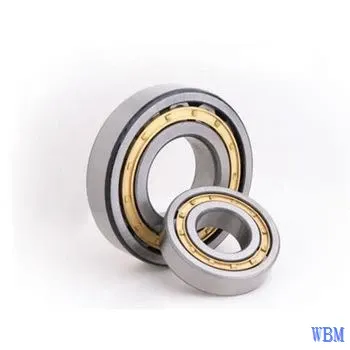

Now, let's look at some real - world examples. In some heavy - haul trains, conical rollers have been used successfully in certain applications. These trains carry large amounts of cargo, and the ability of conical rollers to handle high radial and axial loads makes them a suitable choice. For high - speed passenger trains, although the use of conical rollers is not as widespread, there are ongoing research and development efforts to see if they can be optimized for this application.
In terms of maintenance, conical rollers in railway vehicles require regular inspections. The lubrication needs to be checked and replenished as necessary, and the condition of the rollers and the raceway needs to be monitored. This adds to the overall maintenance cost and time, but it's a necessary step to ensure the safe operation of the train.
Despite the challenges, I believe that conical rollers have a lot of potential in railway vehicles. With the right design, installation, and maintenance, they can offer a reliable solution for handling the complex loads and conditions in the railway environment.
If you're in the railway industry and are considering using conical rollers in your vehicles, I'd love to talk to you. As a supplier of high - quality conical rollers, I can provide you with the products and the expertise you need. Whether it's answering your technical questions, helping with the installation process, or finding the right solution for your specific application, I'm here to assist. So, don't hesitate to reach out and start a conversation about how conical rollers can work for your railway vehicles.
References:
- "Rolling Bearing Technology Handbook"
- Research papers on railway vehicle bearing applications
So, in conclusion, while there are challenges, conical rollers can definitely be used in railway vehicles. They offer unique advantages in terms of load - handling capabilities, but they also require careful consideration in terms of alignment, installation, and cost. If you're interested in exploring the use of conical rollers for your railway projects, I'm just a message away to discuss further and help you make an informed decision.