
Are there magnetic stainless steel balls? This is a question that often comes up in the industry, especially among those who are in need of stainless steel balls for various applications. As a trusted Stainless Steel Ball supplier, I'm here to delve into this topic and provide you with a comprehensive understanding.
First, let's understand the basic properties of stainless steel. Stainless steel is an alloy primarily composed of iron, chromium, and sometimes other elements such as nickel and molybdenum. The addition of chromium forms a thin, invisible layer of chromium oxide on the surface of the steel, which gives stainless steel its corrosion - resistant properties.
Actually, not all stainless steel is non - magnetic. The magnetic properties of stainless steel balls largely depend on their microstructure and composition. There are several types of stainless steel, with the most common ones being austenitic, ferritic, and martensitic.
Austenitic stainless steel is the most widely used type in the production of stainless steel balls. It has a face - centered cubic (FCC) crystal structure. Austenitic stainless steels, like the 304 and 316 grades, are generally non - magnetic in their annealed state. [316 Stainless Steel Balls] are a prime example of austenitic stainless steel. They are highly resistant to corrosion, making them ideal for applications in harsh environments such as marine and chemical industries. Due to their non - magnetic nature, they are also used in electronic devices where magnetic interference needs to be avoided. You can find high - quality 316 stainless steel balls at [/rolling - elements/steel - ball/316 - stainless - steel - balls.html].
On the other hand, ferritic and martensitic stainless steels are magnetic. Ferritic stainless steel has a body - centered cubic (BCC) crystal structure. It contains a relatively high amount of chromium but low amounts of nickel. Ferritic stainless steel balls are magnetic because of their crystal structure, which allows for the alignment of magnetic domains. They offer good corrosion resistance and are often used in applications where magnetic properties are required, such as in magnetic sensors and certain types of machinery.
Martensitic stainless steel is also magnetic. It is formed by heat - treating austenitic stainless steel under specific conditions. Martensitic stainless steel balls are hard and have high strength, making them suitable for applications that require wear resistance, like in ball bearings. [Ball Bearing Balls] are commonly made from martensitic stainless steel or other suitable materials. You can explore a wide range of ball bearing balls at [/rolling - elements/steel - ball/ball - bearing - balls.html].
So, to answer the question “Are there magnetic stainless steel balls?”, the answer is yes. If your application requires magnetic stainless steel balls, you can select ferritic or martensitic stainless steel balls. Ferritic stainless steel balls provide a balance between corrosion resistance and magnetic properties. They can be used in applications such as magnetic filters, where particles need to be attracted and removed from a fluid. Martensitic stainless steel balls, with their high hardness and strength, are perfect for heavy - duty applications like automotive transmissions and industrial machinery.
In addition to magnetic properties, the size and surface finish of stainless steel balls also play crucial roles in their performance. Smaller stainless steel balls are often used in precision instruments, while larger ones are used in heavy - machinery. The surface finish of the ball affects its rolling performance, friction coefficient, and wear resistance. For example, [Solid Steel Balls] with a smooth surface finish are more suitable for high - speed applications as they reduce friction and heat generation. You can find a variety of solid steel balls at [/rolling - elements/steel - ball/solid - steel - balls.html].
When it comes to sourcing stainless steel balls, whether magnetic or non - magnetic, quality and reliability are of utmost importance. As a professional Stainless Steel Ball supplier, we are committed to providing our customers with high - quality products. Our stainless steel balls are manufactured using advanced production techniques and strict quality control measures. We ensure that each ball meets the required standards in terms of size, roundness, surface finish, and material properties.
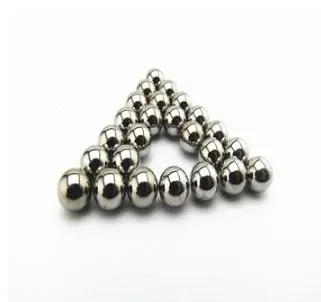
If you are in the market for stainless steel balls, whether you need magnetic ones for a specific application or non - magnetic ones for corrosion - resistant purposes, we are here to assist you. Our team of experts can help you select the most suitable stainless steel balls based on your requirements. We offer a wide range of sizes, grades, and finishes to meet the diverse needs of our customers.
We understand that different industries have different demands for stainless steel balls. For example, the medical industry requires high - precision and non - magnetic stainless steel balls for surgical instruments. The aerospace industry needs balls that can withstand extreme temperatures and pressures. Our products are designed to meet these stringent requirements, ensuring the safety and efficiency of your applications.
In conclusion, magnetic stainless steel balls do exist, and they are widely used in various industries. Whether you are involved in manufacturing, engineering, or research, understanding the magnetic properties of stainless steel balls can help you make the right choice for your projects. If you have any questions about our stainless steel balls or need further assistance in selecting the right product, please feel free to contact us for a detailed consultation. We are looking forward to working with you and providing you with the best stainless steel ball solutions.
References:
- ASM Handbook Volume 1: Properties and Selection: Irons, Steels, and High - Performance Alloys
- Stainless Steel: A Technical Guide by The Nickel Institute