
Hey there! As a supplier of needle rollers, I often get asked if there are any alternative products out there. Well, the short answer is yes, and in this blog, I'm gonna break down some of these alternatives for you.
First off, let's talk about what needle rollers are. Needle rollers are long, thin cylindrical rollers with a small diameter relative to their length. They're commonly used in applications where high load - carrying capacity and compact design are required. They can handle radial loads pretty well and are often found in automotive transmissions, machine tools, and aerospace equipment.
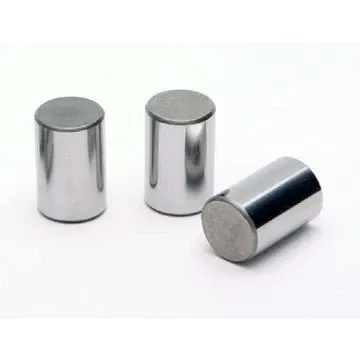
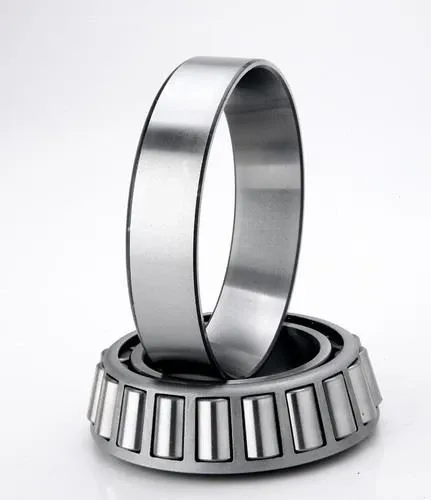
Tapered Rollers
One of the main alternatives to needle rollers is tapered rollers. Tapered rollers are designed in a way that their shape tapers from one end to the other. This unique Taper Roller Disign allows them to handle both radial and axial loads simultaneously.
Unlike needle rollers, which are mainly focused on radial loads, tapered rollers can take on thrust loads in addition to radial forces. This makes them a great choice for applications like automotive wheel bearings. In a car wheel, there are both radial forces from the weight of the vehicle and axial forces from cornering. Tapered rollers can handle these combined loads effectively, ensuring smooth and safe operation of the wheels.
The Interroll Tapered Roller is a well - known type of tapered roller. It's designed with high precision and can offer excellent performance in various industrial applications. These rollers are often used in conveyor systems. In a conveyor, there are loads moving along the belt, creating radial forces, and there can also be side - to - side forces that need to be managed. The Interroll Tapered Roller can handle these complex load conditions, making the conveyor system more reliable and efficient.
Spherical Rollers
Another alternative is spherical rollers. Spherical rollers have a barrel - shaped design, which gives them some unique advantages. The Spherical Roller can accommodate misalignment between the shaft and the housing. This is a big deal in many industrial applications where perfect alignment is difficult to achieve.
For example, in large - scale mining equipment, the shafts and housings can experience some degree of misalignment due to the heavy loads and rough operating conditions. Needle rollers may not perform well in such situations because they require precise alignment to work properly. But spherical rollers can adapt to these misalignments, reducing wear and tear on the components and extending the lifespan of the equipment.
Spherical rollers are also great at handling high radial loads. They distribute the load over a larger surface area compared to needle rollers. This means that they can withstand heavier loads without getting damaged easily. In power generation plants, where large turbines and generators are in operation, spherical rollers are often used to support the heavy rotating shafts.
Cylindrical Rollers
Cylindrical rollers are also an alternative to needle rollers. While they share some similarities with needle rollers, they have their own characteristics. Cylindrical rollers are generally shorter and have a larger diameter compared to needle rollers.
They can handle high radial loads, just like needle rollers, but they may not be as good at fitting into compact spaces. However, in applications where space is not a major constraint but high load - carrying capacity is crucial, cylindrical rollers are a great option. You can find them in heavy - duty machinery such as steel mills. In a steel mill, there are large rolling mills that need to handle extremely heavy loads. Cylindrical rollers can provide the necessary support for the rollers in these mills, ensuring smooth and efficient operation.
When to Choose Needle Rollers Over Alternatives
Now, you might be wondering, if there are all these alternatives, why would anyone choose needle rollers? Well, needle rollers have their own set of advantages. Their small diameter allows them to fit into very compact spaces. In applications where space is at a premium, like in some high - precision medical devices or small - sized motors, needle rollers are the go - to choice.
They also have a high load - to - size ratio. This means that they can handle relatively high loads even though they are small in size. In a small - sized gearbox, for example, needle rollers can provide the necessary support for the gears without taking up too much space.
Conclusion
In conclusion, there are definitely alternative products to needle rollers, such as tapered rollers, spherical rollers, and cylindrical rollers. Each of these alternatives has its own unique features and is suitable for different applications. As a needle roller supplier, I understand the importance of choosing the right product for the job.
If you're in the process of deciding between needle rollers and their alternatives, I'd be more than happy to help. Whether you need advice on which product is best for your specific application or you're looking to make a purchase, feel free to reach out. We can have a detailed discussion about your requirements and find the perfect solution for you.
References
- "Rolling Bearing Handbook"
- Industry reports on rolling element applications