
Are inch steel balls compatible with other materials? This is a question that often comes up in various industrial and manufacturing contexts. As a supplier of inch steel balls, I've encountered this query numerous times, and I'm here to delve into this topic in detail.
Understanding Inch Steel Balls
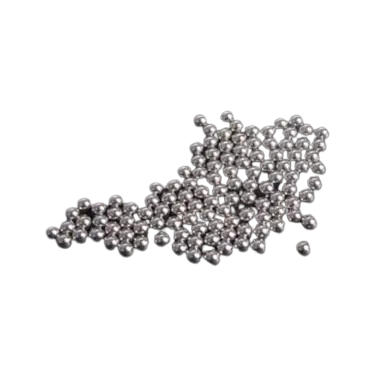
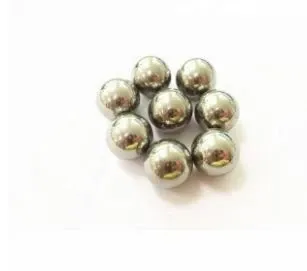
Inch steel balls are precision - engineered components widely used in a variety of applications, from ball bearings in automotive engines to precision instruments in the aerospace industry. They are manufactured to strict standards, with specific diameters measured in inches, and are known for their high hardness, excellent wear resistance, and precise spherical shape.
The quality of inch steel balls depends on several factors, including the type of steel used, the manufacturing process, and the heat treatment. High - carbon chromium steels are commonly used due to their ability to achieve high hardness and good corrosion resistance after proper heat treatment.
Compatibility with Metals
Ferrous Metals
When it comes to ferrous metals such as steel and iron, inch steel balls generally have excellent compatibility. In ball bearings, for example, steel balls roll smoothly against steel races. The similar material properties ensure low friction and high - load - bearing capacity. The hardness of the steel balls and the races can be carefully matched to optimize performance. If the steel balls are too hard compared to the race, it may lead to excessive wear on the race; conversely, if the balls are too soft, they may deform under load.
In some industrial machinery, inch steel balls are used in iron - based components. The iron provides a relatively stable and strong base, and the steel balls can perform their rolling function effectively. However, in a corrosive environment, both the steel balls and the iron components may need proper protection, such as coatings or the use of corrosion - resistant steels.
Non - Ferrous Metals
Aluminum is a lightweight non - ferrous metal widely used in modern manufacturing. Inch steel balls can be used in aluminum components, but there are some considerations. Aluminum is softer than steel, so the surface of the aluminum part may wear over time. To mitigate this, a hard anodizing treatment can be applied to the aluminum surface to increase its hardness.
Copper and its alloys, such as brass and bronze, are also common non - ferrous metals. Steel balls can work well with these materials, especially in applications where electrical conductivity or good corrosion resistance is required. For example, in some electrical connectors, steel balls may be used in conjunction with copper - based parts to ensure reliable contact. However, in a moist environment, there may be a risk of galvanic corrosion between the steel balls and the copper - based components. Using a suitable lubricant or a protective coating can help prevent this.
Compatibility with Polymers
Thermoplastics
Thermoplastics are widely used in many industries due to their ease of processing and low cost. Inch steel balls can be used in thermoplastic components, such as in plastic ball bearings. The smooth surface of the steel balls allows for relatively low - friction movement within the thermoplastic housing. However, thermoplastics have a lower melting point compared to metals. High - speed or high - load applications may generate heat, which could potentially cause the thermoplastic to deform. Therefore, in such cases, thermoplastics with high - temperature resistance should be selected.
Thermosetting Plastics
Thermosetting plastics are known for their high strength and heat resistance. Inch steel balls can be effectively used in thermosetting plastic components. For example, in some aerospace applications, thermosetting plastics are used to make lightweight yet strong parts, and steel balls can be incorporated to provide rolling functions. The compatibility between steel balls and thermosetting plastics is generally good, but proper adhesion and sealing may be required to prevent debris from entering the contact area.
Compatibility with Ceramics
Ceramics have unique properties such as high hardness, high temperature resistance, and low density. In some high - performance applications, inch steel balls may be used in combination with ceramic components. For example, in some high - speed ball bearings, ceramic races may be used with steel balls. The ceramic races can withstand high temperatures and provide excellent wear resistance, while the steel balls offer good ductility and load - bearing capacity. However, the coefficient of thermal expansion between steel and ceramics is different. This means that in applications with large temperature variations, special design considerations are needed to prevent excessive stress due to thermal expansion or contraction.
Applications and Compatibility
Automotive Industry
In the automotive industry, inch steel balls are used in various applications, from engine components to steering systems. In ball joints, steel balls work in conjunction with metal housings. The compatibility between the steel balls and the metal parts ensures smooth and reliable operation. For example, in the steering system, the precise movement of the steel balls allows for accurate steering control.
Aerospace Industry
In aerospace applications, where reliability and performance are crucial, inch steel balls are used in critical components. They may be used in combination with advanced materials such as titanium alloys and high - performance polymers. The compatibility between the steel balls and these materials needs to be carefully evaluated to ensure the safety and performance of the aircraft.
Medical Industry
In the medical industry, inch steel balls are used in some medical devices, such as surgical instruments. They may be in contact with various materials, including stainless steel, plastics, and ceramics. Compatibility is essential to ensure the safety and functionality of the medical devices. For example, in a ball - and - socket joint of a surgical instrument, the steel ball and the mating material must be compatible to allow for smooth movement and long - term use.
Where to Find Related Products
If you are interested in other types of steel balls, you can visit our websites. For Metric Steel Ball, Metal Ball, and Din 5401 Steel Ball, these links provide more information and product details.
Conclusion and Contact for Purchase
In conclusion, inch steel balls can be compatible with a wide range of materials, but careful consideration of material properties, application requirements, and environmental factors is necessary. Whether it's in the automotive, aerospace, medical, or other industries, the proper selection and use of inch steel balls in combination with other materials can lead to optimized performance and long - lasting products.
If you are in need of high - quality inch steel balls or have questions about their compatibility with specific materials, we are here to help. We can provide detailed technical support and product information to ensure that you make the right choice for your application. Please feel free to contact us for further discussion and to start a purchase negotiation.
References
- "Handbook of Materials Selection" by Michael F. Ashby
- "Mechanical Engineering Design" by Joseph E. Shigley and Charles R. Mischke
- Industry - specific research papers on material compatibility and ball - bearing technology.