
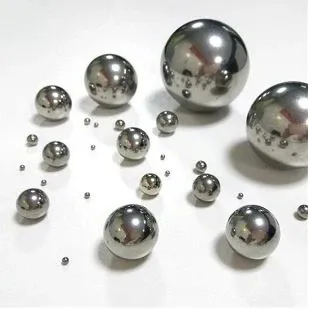
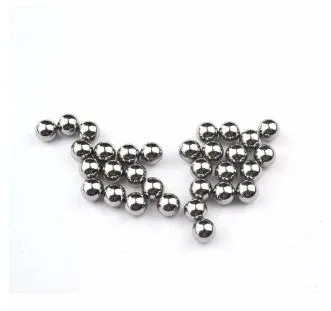
Carbon steel balls are a common type of industrial component, widely used in various fields due to their excellent mechanical properties and relatively low cost. When it comes to high - pressure applications, the suitability of carbon steel balls is a topic worthy of in - depth discussion. As a carbon steel ball supplier, I have accumulated a wealth of experience in this area and would like to share some insights.
Properties of Carbon Steel Balls
Carbon steel balls are made from carbon steel, which is an alloy composed mainly of iron and carbon, with small amounts of other elements such as manganese, silicon, sulfur, and phosphorus. The carbon content in carbon steel can vary, and this variation significantly affects the properties of the steel balls. Generally, higher carbon content leads to increased hardness and strength but reduced ductility.
One of the key advantages of carbon steel balls is their high hardness. Hardness is crucial in high - pressure applications as it allows the balls to withstand the large forces exerted on them without significant deformation. For example, in ball bearings used in heavy - duty machinery, the balls need to be able to support high loads without flattening or cracking. Carbon steel balls with appropriate heat treatment can achieve a hardness level that meets the requirements of many high - pressure scenarios.
In addition to hardness, carbon steel balls also have good wear resistance. In high - pressure applications, there is often relative motion between the balls and other components, which can cause wear. The wear resistance of carbon steel balls helps to extend their service life and maintain the performance of the entire system. For instance, in hydraulic systems where the balls are used in valves or pumps, wear resistance ensures the long - term stability of the system.
High - Pressure Application Scenarios
There are numerous high - pressure application scenarios where carbon steel balls may be considered. One of the most common is in the field of mechanical engineering, specifically in ball bearings. Ball bearings are used in a wide range of equipment, from automotive engines to industrial machinery. In these applications, the balls are subjected to high radial and axial loads, and they need to roll smoothly to reduce friction. Carbon steel balls can provide the necessary strength and hardness to handle these loads. You can find a variety of Metal Ball options suitable for such applications on our website.
Another important high - pressure application is in hydraulic systems. Hydraulic systems use pressurized fluid to transmit power, and carbon steel balls are often used in valves and pumps. In valves, the balls act as sealing elements, and they need to withstand the high - pressure fluid without leaking. In pumps, the balls are involved in the transfer of fluid, and they must be able to endure the high - pressure forces generated during the pumping process. Our Inch Steel Ball products are available in different sizes to meet the specific requirements of hydraulic systems.
The oil and gas industry also presents many high - pressure applications for carbon steel balls. In well - drilling operations, for example, the balls are used in downhole tools. These tools are exposed to extremely high pressures and harsh environmental conditions. Carbon steel balls can offer the necessary strength and durability to operate effectively in such challenging environments. Our Din 5401 Steel Ball products comply with relevant standards and are suitable for use in the oil and gas industry.
Challenges in High - Pressure Applications
Despite their many advantages, carbon steel balls also face some challenges when used in high - pressure applications. One of the main issues is corrosion. High - pressure environments often involve the presence of corrosive substances, such as water, chemicals, or gases. Carbon steel is susceptible to corrosion, especially in the presence of moisture and oxygen. Corrosion can reduce the strength and hardness of the balls, leading to premature failure. To address this problem, appropriate surface treatments can be applied to the carbon steel balls, such as plating or coating, to improve their corrosion resistance.
Another challenge is the potential for fatigue failure. In high - pressure applications, the balls are subjected to repeated loading, which can cause fatigue cracks to develop over time. Fatigue failure can occur suddenly and lead to the breakdown of the entire system. To minimize the risk of fatigue failure, proper design and selection of carbon steel balls are essential. Factors such as the material quality, heat treatment process, and surface finish all need to be carefully considered.
Suitability Assessment
To determine whether carbon steel balls are suitable for high - pressure applications, several factors need to be considered. First, the specific pressure requirements of the application must be known. Different high - pressure scenarios have different pressure levels, and the carbon steel balls need to be able to withstand these pressures without failure. Second, the environmental conditions, including temperature, humidity, and the presence of corrosive substances, should be evaluated. This will help to determine whether additional corrosion - protection measures are necessary.
The size and precision of the carbon steel balls also play an important role. In some high - pressure applications, such as in precision machinery, the balls need to have a very high degree of roundness and dimensional accuracy. Any deviation in size or shape can affect the performance of the system.
In general, carbon steel balls can be a suitable choice for many high - pressure applications, especially when the pressure levels are not extremely high and the environmental conditions are relatively mild. However, for more demanding applications, such as those in the aerospace or nuclear industries, other materials with higher performance, such as stainless steel or ceramic, may be preferred.
Conclusion
As a carbon steel ball supplier, I believe that carbon steel balls have great potential in high - pressure applications. Their combination of hardness, wear resistance, and relatively low cost makes them an attractive option for many industries. However, it is important to carefully assess the specific requirements of each application and take appropriate measures to address the challenges, such as corrosion and fatigue failure.
If you are interested in using carbon steel balls for your high - pressure applications, we would be more than happy to assist you. Our team of experts can provide you with professional advice on product selection, design, and application. Contact us to start a procurement discussion and find the best carbon steel ball solutions for your needs.
References
- ASM Handbook Volume 1: Properties and Selection: Irons, Steels, and High - Performance Alloys
- Machinery's Handbook, 31st Edition
- Standards for Rolling Bearings and Related Components (ISO, DIN, etc.)